


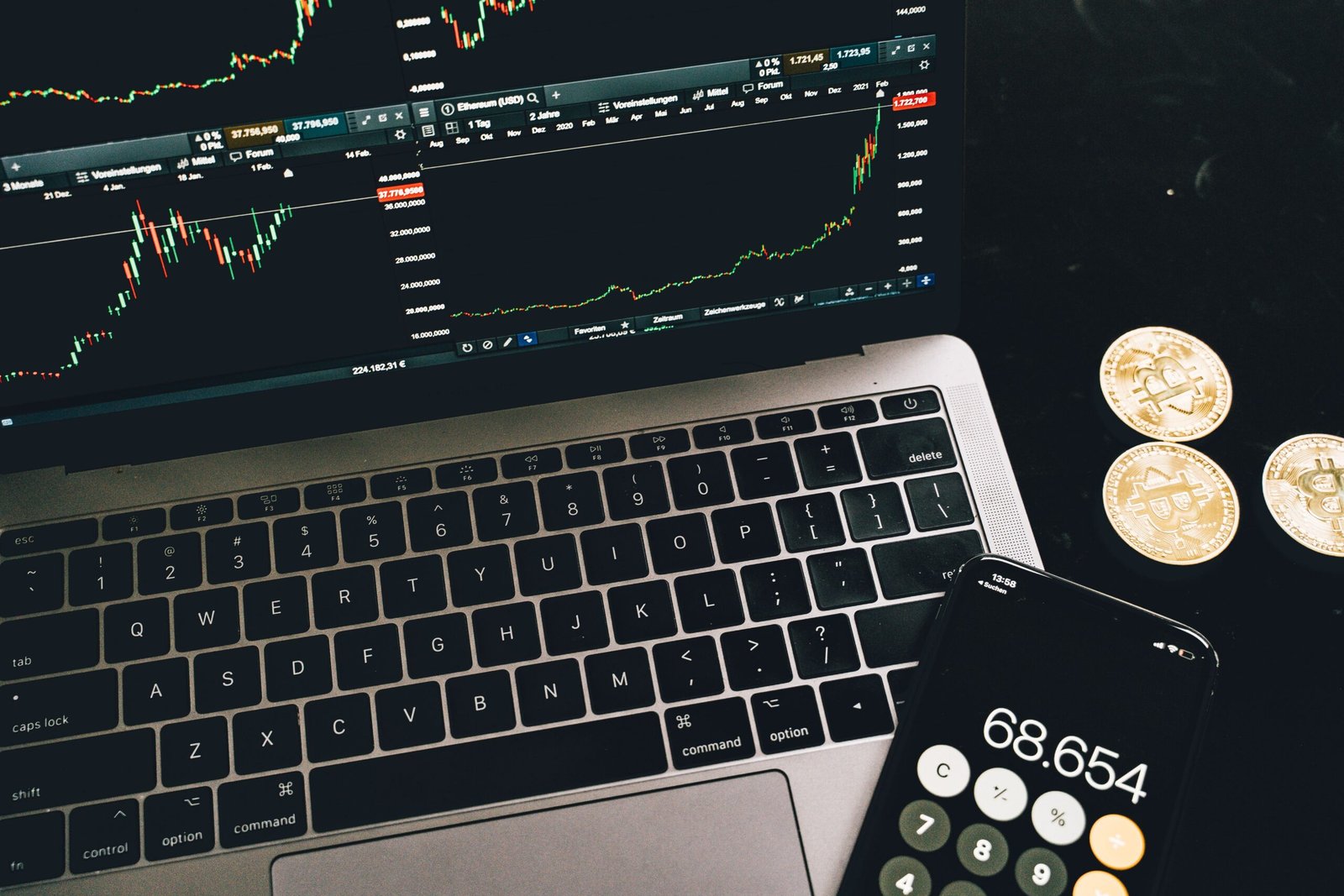
Prices of crypto can change so wildly over the course of a very short time. So from one buying opportunity to the next, bitcoin and ethereum-or any other crypto-could climb or crash dramatically, leaving investors feeling like it’s just impossible to choose an entry point. The idea behind a strategy called dollar-cost averaging (DCA) is to alleviate the pressure of deciding on one entry point.
So, what does DCA mean in crypto? It refers to investing a predetermined amount of money into a cryptocurrency at regular intervals rather than putting the entire intended investment into the market at one time. For example, someone might invest the same dollar amount every week or month regardless of whether the market is rising or falling.
Prices in crypto can be extremely volatile over a really short time span. Because of that, between one buyable point to another, Bitcoin or Ethereum (or any other cryptocurrency) can soar or crash to an extreme level, and cause the investor to feel it’s impossible to get just a one entry. What Dollar Cost Averaging strategy focuses on is to relief the pain about one entry point for buying it.
What Does DCA Mean in Crypto?
How Does Dollar-Cost Averaging Work?
DCA works by separating an investment into multiple purchases.
The process is relatively straightforward:
- Choose an asset.
The investor identifies the cryptocurrency they intend to buy. - Determine an investment amount.
They decide how much money they are comfortable allocating over the chosen period. - Choose a schedule.
Purchases might occur weekly, biweekly, or monthly. - Keep the purchase amount consistent.
The investor contributes approximately the same dollar amount at each interval. - Continue according to the plan.
The strategy does not require changing the purchase amount every time the market moves.
For example, imagine an investor purchases $50 worth of an asset every Monday.
Over the course of 1 week the cryptocurrency may be $100/unit. So $50 of it may purchase 0.5 units. The next week may have the price drop to $50/unit such that $50 of it can purchase 1 unit.
And then next week the price could rise to $125/unit and so $50 would purchases 0.4 units.
It should be noted that it may purchase a different number of units depending on the prices each week whereas the contribution is held constant in a certain dollar amount.
Why Do Crypto Investors Use DCA?
The most prominent DCA benefit-it eliminates the pressure of single timing-is perhaps also its biggest one. It is incredibly hard to pinpoint the exact bottom of a crypto market. Prices have a knack for slipping further after reaching what seemed to be a great deal, or surging rapidly while an investor tries to make up their mind.
A periodic investing approach turns that around; it foregoes the ‘is today the time to buy’ dilemma altogether by going in on a regular schedule.
DCA can also promote building of an investment habit. In lieu of feeling the need to take immediate action after seeing each headline, dip, or hike, the investor has a more structured and deliberate framework in place. That does not make DCA intrinsically ‘better’ than a lump sum purchase. It’s appropriate at various times with various types of assets, on different time horizons and for different risk appetites with a varied sum of money.
DCA vs. Lump-Sum Investing

The main difference between DCA and lump-sum investing is when the money enters the market.
With lump-sum investing, an investor puts the intended amount into the asset at once.
With DCA, that amount is divided across multiple purchases.
| Approach | How it works | Main characteristic |
| DCA | Invest a fixed amount at regular intervals | Spreads purchases over time |
| Lump sum | Invest the available amount at once | Full exposure begins immediately |
| Market timing | Attempts to choose specific entry points | Depends heavily on price predictions |
Neither method guarantees a better result.
Consistent asset growth once the investor possesses adequate funds may lead to increased market time if the total amount was invested upfront. If the asset depreciates significantly following a lump-sum investment, phased purchases may soften the blow of entry into such a specific price point.
DCA therefore changes the timing pattern rather than removing investment risk which is why understanding crypto investment strategies can help investors evaluate different approaches before committing funds.
An Example of DCA During a Volatile Market
Imagine an investor decides to invest $400 into a cryptocurrency over four months.
They purchase $100 each month:
- Month 1: Price is $100 per unit → 1 unit
- Month 2: Price is $80 → 1.25 units
- Month 3: Price is $50 → 2 units
- Month 4: Price is $100 → 1 unit
The investor has contributed $400 and accumulated 5.25 units.
Their average cost per unit is calculated by dividing the total amount invested by the number of units acquired:
$400 ÷ 5.25 = approximately $76.19 per unit
Note that the investor did not even have to know about the future 50 dollar low. This recurring pattern naturally led to larger purchases during the month that the price was lower.
This scenario is for illustration purposes only. Actual cryptocurrency markets are complex and transaction fees, spreads, taxes and shifting price will influence your actual returns.
The Potential Benefits of DCA
It Reduces the Pressure of Market Timing
Crypto markets can be unpredictable. DCA removes the requirement to make one major entry decision.
Instead of trying to identify a perfect buying opportunity, the investor commits to a schedule.
It Creates a Consistent Process
A predetermined contribution schedule can make investing more systematic.
For someone who has decided on a long-term allocation, automatic recurring purchases may reduce the temptation to constantly change plans based on short-term market movements.
It Buys More at Lower Prices
Because the contribution is fixed in dollars, a lower cryptocurrency price means the same investment buys more units.
This is sometimes described as averaging into the position.
It Can Reduce Emotional Decision-Making
Crypto markets can produce strong emotional reactions. Large rallies may create fear of missing out, while sharp declines can encourage panic.
A predetermined schedule can help investors avoid making every decision based on the latest price movement.
The Risks and Limitations of DCA
DCA is not a risk-free strategy.
It Does Not Protect Against a Falling Asset
If the cryptocurrency continues declining over a prolonged period, regularly buying it does not prevent losses.
An investor can continue accumulating an asset whose market value keeps falling.
It May Underperform an Early Lump-Sum Investment
If the price rises substantially after the investor has the full amount available, spreading the purchases over time means some capital remains outside the market during the earlier gains.
This is an important trade-off.
Fees Can Matter
Repeat buying adds to the number of transactions. Each transaction would typically have a fee or spread, depending on the platform/payment type.
A buying strategy that appears sensible on paper before fees would be sensible a second time if multiple repeat purchases would generate significant costs.
DCA Does Not Make a Bad Asset Good
Repeat purchase does not improve a bad investment decision.
If an asset-like a coin-suffer from weak fundament, severe liquidation issues, security issues and long term perspective doesn’t look bright at all, repurchasing that coin again and again does not make investment sounder.
The issue here is the entry mechanism into a position and not if the asset is worth to be held or not.
How Often Should You DCA Into Crypto?
There is no universally correct schedule.
Some typical investment frequency may be at weekly, bi-weekly, monthly. Depending on the investor’s cash constraint, expected cash income flows, transaction costs and investment plan, these frequency may work differently for various people. An investor who receives income at monthly frequency can stick on a monthly plan conveniently while another investor may prefer smaller transaction on weekly basis.
The most workable and sustainable plan would be an investment frequency that the investor is willing and able to invest regularly, without adversely affecting the planned usage of cash flow for critical items. Investors should invest money which they would not need for necessities such as food, rent, unexpected medical cost, loan repayments and the likes.
What Should You Consider Before Starting?
Before establishing a recurring crypto purchase plan, consider several factors.
Your Time Horizon
The DCA itself, is usually considered a more long-term strategy. The longer you are scheduling it out for, the more essential is it to be aware that the conditions of the market could potentially vary to a large degree throughout that entire time..
Your Risk Tolerance
Cryptocurrency can experience substantial price volatility. A strategy should reflect how much loss you could realistically tolerate.
The Asset
Research the cryptocurrency independently rather than assuming that DCA makes an asset appropriate.
Consider its purpose, development activity, network characteristics, liquidity, security considerations, and broader risks.
Transaction Costs
Check the fees and spreads associated with recurring purchases. Small costs can accumulate when transactions occur frequently.
Storage and Security
The purchase of crypto also brings about the issue of custody. Based on the way the asset is held, investors will have to contend with issues of exchange security, wallet security, private keys, and recovery procedures.
Common DCA Mistakes
Increasing the Amount Because Prices Are Falling
A fall in price does not make an asset safer nor more valuable.
Switching the stable DCA plan due to market hysteria would transform a disciplined approach into an emotional decision.
Chasing a Rally
The opposite mistake is increasing purchases simply because prices are rising rapidly.
A strong rally can create fear of missing out, but short-term momentum does not guarantee continued appreciation.
Ignoring Fees
A frequent purchase schedule should be evaluated after accounting for transaction costs.
Investing Without an Exit Plan
DCA focuses on accumulation, but investors should still understand what circumstances might lead them to reduce or close a position.
Assuming DCA Guarantees Profit
It does not. The average purchase price may be lower than some individual purchase prices, but the asset’s eventual market value can still be below the investor’s total cost.
Is DCA Better During a Crypto Bear Market?
It’s psychologically hard to carry out DCA during a bear market since it involves committing more money into positions that are still going down.
From a mathematical point of view, every lower price has a higher chance of procuring more amount of asset. However this may not be entirely true for all fallen market since it might remain fall.
In essence, the crux of the whole thing lies on whether one is comfortable to hold on and ride the risk that it may go further down.
This does not mean you should “buy at all costs”. If some new piece of information has totally overturned your investment thesis, maybe you should try to modify your plan.
DCA and Crypto Taxes

Transactions can also trigger tax obligations based on where an investor resided. If transactions are made frequently, each sale date/cost basis can be a critical aspect for tax purposes when that asset is eventually sold, transferred or otherwise disposed.
Investors should keep accurate records of purchase dates amount invested quantity received fees transaction records transfers between wallets or platforms and subsequent sales or exchanges while also reviewing guidance from the IRS on digital asset tax reporting.
Investors should keep accurate records of:
- Purchase dates
- Amount invested
- Quantity received
- Fees
- Transaction records
- Transfers between wallets or platforms
- Subsequent sales or exchanges
Each jurisdiction has its own laws governing this and each subject to modification. For any substantive activity one would be wise to consult a reputable cryptocurrency tax expert.
When DCA May Not Be Appropriate
But the DCA isn’t suitable for all investors in all situations. DCA might not work as well where investors are investing money that they can’t afford to lose, haven’t established an emergency fund or have immediate high-cost debt. It could also be inappropriate for an individual considering such a trade without researching what they intend to acquire, and is perhaps hoping for a short-term trading scenario, rather than wealth build. DCA should probably complement and supplement an individual financial strategy and should not be regarded as a complete reply to all investing queries.
Frequently Asked Questions
What does DCA mean in crypto?
DCA stands for dollar-cost averaging. It is an investment strategy that allows an investor to purchase a fixed dollar amount of a cryptocurrency asset at regular time intervals. It is a systematic way of investing which avoids the risks associated with predicting the market and timing the purchase of a particular crypto asset.
Is DCA a good strategy for crypto?
DCA is a very good strategy for crypto because it helps the investor implement a disciplined approach to buying crypto. However, it is important to understand that it does not make one immune to losing money in the highly volatile world of crypto.
How much should I DCA into crypto?
There is no right or wrong amount to dollar-cost average in crypto. Whatever amount you decide to invest should not affect your financial goals, savings, emergency fund, or bills.
Is it better to DCA or buy crypto all at once?
It is impossible to say which is a better strategy between dollar cost averaging and lump sum because it depends on how the prices of the crypto asset will behave. While DCA removes the risks associated with timing the market, a lump sum might prove to be much more profitable if one accurately times the market.
Does DCA work if crypto goes down?
Dollar-cost averaging works by purchasing more of a depreciating asset, hence more units will be bought as the price of the crypto asset falls. However, it is important to note that DCA is not a foolproof method of ensuring that one will not lose money. If the price of the crypto asset continues to fall or fails to rise above the cost base, the investor will lose money.
How often should you DCA into crypto?
The most common time intervals used in DCA are weekly, biweekly, and monthly. Which ever time interval one chooses, it should synchronise with their financial capability and budgeting needs while also factoring in the cost of transactions.
Can DCA reduce crypto risk?
Dollar-cost averaging can help reduce the risk of investing a large amount of money in crypto and experiencing a market crash. However, it is important to note that it does not reduce the risk that comes with the volatility of crypto assets.
Should I stop DCA’ing into crypto when crypto prices fall?
The fact that crypto prices have fallen is not a reason to stop dollar-cost averaging. However, one should reevaluate if there has been a change in fortune or investment thesis that would warrant a pause to DCA.
Final Takeaway
Understanding what does DCA mean in crypto is essentially about understanding a disciplined approach to investing: rather than committing the entire planned amount at one time, an investor spreads purchases across regular intervals.
DCA allows diversification over time not only with the price of entry but it’s potentially possible to stick to your strategy in volatile markets. However, a question may arise as to what DCA provides- It cannot mitigate market risk, nor can it offer any kind of guarantee in terms of profits or convert a risky investment into a profitable one.
Before you have auto buys set up, it’s important to analyze yourself and be absolutely certain of what you are investing in as well as how the crypto itself may function, your own personal situation and when you believe you’ll need the money, tolerance for loss, possible trading fees involved, as well as whether your chosen exchanges are secure and tax implications on those assets. Dollar cost averaging can also be viewed as a tool to apply method and structure to investing in crypto, as opposed to buying only based on predictions of near-term highs and lows.
”’