



Disgusting. As urine dries, water evaporating leaves behind concentrated organic matter. It’s this element that gives urine the persistent smell even when a patch is dry.
It may even be more visible with time, if liquid has soaked through the mattress upholstery and into padding.
But a dried urine stain does not necessitate a tossed mattress — the proper cleaning solutions can break down residue, minimize discoloration, and neutralize odors without over-saturating a mattress, which poses its own challenges.
If you’re wondering how to get urine out of a mattress when dry, start by vacuuming the area, treating the stain with an appropriate cleaning solution, allowing adequate contact time, and using baking soda or an enzyme-based product when odor persists. The method you choose should also depend on the mattress material and how old or severe the stain is.
Why Dried Urine Is Harder to Clean
Recent urine is generally the easiest to deal with because it has less opportunity to saturate into the fibers and padding of the mattress and furniture. When the water dries residue is left on the fabric, this residue will cause both stains and odors. The odors are sometimes apparent more strongly when the treated spot becomes damp or humid, which can make persistent household odors more noticeable. It is for this reason why some areas of mattresses appear treated correctly when they are first cleaned but the odor returns later.
When learning how to get urine out of a mattress when dry, remember that a dried stain can also extend beyond what is visible. The liquid may have traveled through the mattress cover and into the inner layers before drying. Cleaning only the surface may therefore improve the appearance without completely addressing the source of the smell.
The goal is not to flood the mattress until the old residue becomes wet again. Instead, you want to loosen and break down the residue while using as little moisture as practical.
What you need
Depending on the method you choose, useful supplies may include:
- A vacuum cleaner with an upholstery attachment
- Clean microfiber cloths
- A spray bottle
- White vinegar
- Water
- Baking soda
- A suitable enzyme-based cleaner
- A soft brush
- A fan for improved air circulation
When using any cleaning product, consult the mattress manufacturer for cleaning and care instructions. Mattresses may consist of foam, glue, special material, or treatments that can have unfavorable reactions when exposed to a lot of water or a given product.
Start by Preparing the Mattress
First of all, take away all your bedding-the mattress pads, the sheets, the covers, everything-so that it can be laundered. The washing of these elements has two functions: that of cleaning them, and that of ensuring the odor is not transferred to your mattress during the process. Now vacuum your mattress.
Focus your attentions in particular on the area where the stain appears.
This step will draw out any fibers and other items.
When learning how to get urine out of a mattress when dry, inspect the stain under good lighting if it is clearly visible. Determine whether you’re dealing primarily with discoloration, odor, or both. A faint yellowish mark with a strong smell may require a different approach from a surface stain with little odor.
Do not attempt to remove the dry stain vigorously at first attempt. Over-enthusiastic scrubbing will work the residual substance into the fabric deeper and potentially affect your mattress cover.
You should also see if the mattress has a removable wash cover. If so this should be taken of the mattress and washed according to directions rather than the whole mattress.
How to Get Urine Out of a Mattress When Dry Using Vinegar and Baking Soda
Using vinegar solution diluted in water then bicarbonate soda is the common house practice after a long sitting urine stain. While the vinegar solution could take away any bad smells, baking soda is good at absorbing moisture and odors out of the treated spots.
The home practice above could take effect at a not deeply soaked mattress or with a small surface stain.
Step-by-step method
1. Vacuum the area.
Remove loose debris before treatment.
2. Prepare a diluted solution.
Mix equal parts white vinegar and water in a spray bottle. Avoid saturating the mattress.
3. Lightly apply the solution.
Mist the affected area rather than soaking it. The objective is to dampen the stained fabric enough to help loosen residue.
4. Allow it to sit briefly.
Give the solution time to work rather than wiping it away immediately.
5. Blot excess moisture.
Use a clean cloth to press against the area. Do not aggressively rub the stain.
6. Cover the area with baking soda.
Apply a generous layer of baking soda over the dampened section.
7. Allow the baking soda to dry.
Leaving it for several hours gives it time to absorb residual moisture and odors. For a particularly stubborn odor, longer contact may be useful as long as the mattress remains in a dry, well-ventilated environment.
8. Vacuum thoroughly.
Once the area is completely dry, remove all of the baking soda.
If an odor remains, repeating the same treatment several times may have limited benefit. At that point, an enzyme cleaner may be a better option.
Why Enzyme Cleaners Can Help With Urine Odor
Enzyme cleaners are used for the removal of specific types of organic compounds. Enzyme cleaners are also helpful for the removal of organic stains or odors remaining after standard surface cleaning. In the case of an old urine stain an enzyme based cleaning solution will be more useful than covering it with a flowery scent.
Make sure to purchase an enzyme cleaner designed for urine or pet-urine odor removal and which is safe to use on upholstery and mattresses. Be careful to follow the instructions because some require you to allow the area to remain wet for a period to allow the enzymes to work.
How to use an enzyme cleaner safely
First, try your stain remover on a small hidden spot on the mattress to see if the material changes. If it does not, continue.
Then test the stain remover according to label directions on the stained part of the mattress (do not pour excessive amounts of stain remover onto the mattress) and allow it to sit on the stain per directions. Blot away extra moisture with cloths if the directions say.
Do not put the bedding back on the mattress until it has completely air dried.
If the visible stain disappears but the smell still returns, enzyme stain cleaners are great; that indicates the source of the stain has soaked under the surface.
How to Remove a Strong Urine Smell From a Mattress
Smell that doesn’t go away after cleaning often implies there’s a deeper issue beyond the discoloration.
If the urine has soaked through to the mattress core or padding, cleaning the surface level probably won’t eliminate the smell, and repeatedly spraying the top can make drying even harder.
Rather focus on treatment of the spill with control and focus.
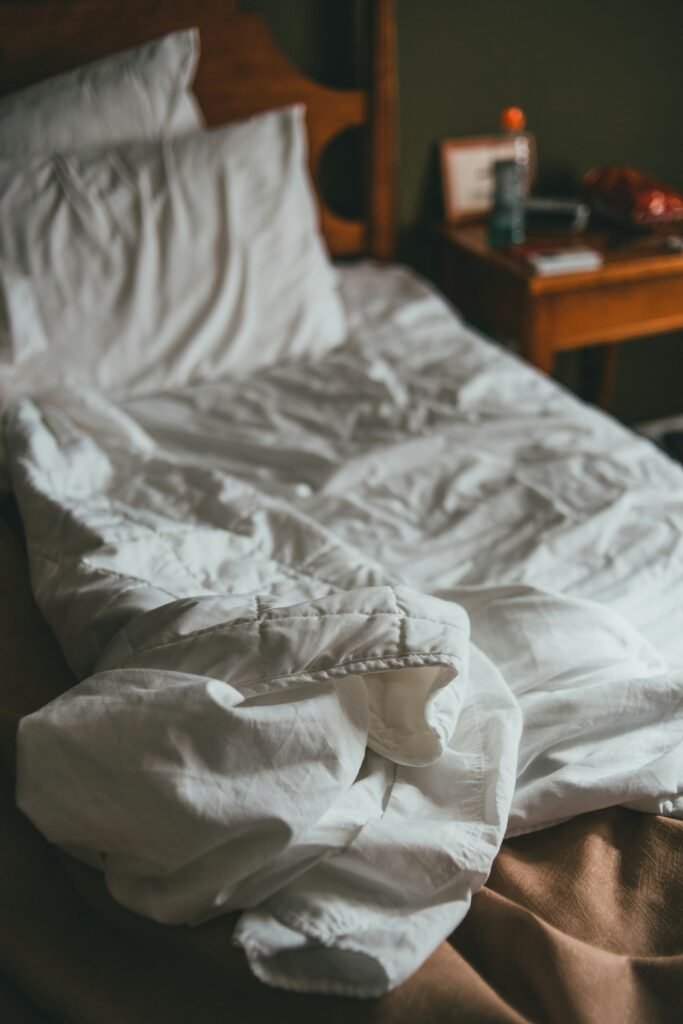
After spraying to clean, ensure the mattress is positioned so that air may flow around it. Open doors and windows whenever the weather permits, use a fan to help circulate the air, and do not cover the mattress until it is fully dry.
If trying to dry the mattress quickly, avoid using excessive amounts of heat unless explicitly advised to do so by the mattress manufacturer, as foam cores and finishes can be easily damaged by heat.
If you’re learning how to get urine out of a mattress when dry, remember that if the odor becomes noticeable again after the mattress is completely dry, you should reassess the affected area. You may need another appropriate enzyme treatment, particularly if the original accident penetrated deeply.
For severe contamination that has reached multiple layers, professional mattress or upholstery cleaning may be more appropriate than repeated home treatments.
What to Do About a Yellow Urine Stain
Yellow, tan, and even brown discolorations can result from dried urine. Odor and stain removal are distinct processes with a close relationship. While a cleaning solution might kill an odor without fully renewing the mattress color; a bleaching agent might lighten fabric but leave beneath it some lodged-in residues. Never be inclined to spray a mattress with household bleaching solutions or chlorine bleach as these compounds are harsh on fibers and fabric and are also potentially damaging to whatever kind of mattress materials (whether foam or otherwise) one has.
When learning how to get urine out of a mattress when dry, you may come across hydrogen peroxide in homemade stain treatments, but it can lighten or discolor certain fabrics. If you consider using it, check the mattress care instructions and perform a small hidden-area test first. A product designed specifically for the material is generally more predictable.
For a mattress with a removable cover, treating the cover separately may produce a better result than applying stronger chemicals to the mattress itself.
How Much Moisture Is Too Much?
One of the tricky areas about cleaning mattresses is providing sufficient cleaning without creating too much moisture.
A mattress isn’t like a washable towel. You can’t rinse an mattress all the way and put it in the dryer. A mattress is made up, or contains within it, many layers of different materials and some potentially of a foam base that holds moisture well.
Too much moisture will only mean it will sit around under the mattress and that means you’ll have unpleasant odours and a very undesirable sleeping environment.
A good guide for cleaning a mattress is to “treat don’t drench”. You don’t need to use enough solution that you are drowning the mattress, only what it takes to treat the area you need to.
After treatment blot the mattress rather than rub or wring it as part of proper mattress care. Put it in as airy a place as you possibly can, preferably with a fan to add circulation.
It may take days to allow the mattress to thoroughly dry through if the dampness has seeped all the way through so don’t just go by the surface area.
Common Mistakes to Avoid
Scrubbing aggressively
Hard scrubbing can spread the stain and damage delicate mattress fabric. Blotting and controlled brushing are usually preferable.
Using too much cleaner
More product does not necessarily mean better cleaning. Excess liquid can travel deeper into the mattress and become difficult to remove.
Covering the mattress while damp
Putting sheets back on too soon traps moisture. Allow the treated area to dry completely first.
Mixing cleaning chemicals
Do not combine different household cleaners unless the product instructions specifically say they are compatible. Some combinations can create dangerous fumes or unwanted chemical reactions.
Masking the smell with air freshener
A fragrance may temporarily cover urine odor without removing the residue causing it. Treat the affected area rather than relying on perfume or deodorizing sprays.
Ignoring the mattress cover
If urine reached a mattress protector, fitted sheet, or removable cover, those items need separate cleaning. Otherwise, odor can return even after the mattress itself has been treated.
Repeating ineffective methods indefinitely
If several careful cleaning attempts have failed, more of the same treatment may not solve a deeply absorbed stain. At that stage, consider an enzyme product or professional cleaning.
Special Considerations for Memory Foam Mattresses
Remember that memory foam can soak in liquids and hold moisture deep within it, and should therefore be treated carefully. Do not saturate it with any cleaning solutions; in fact, the foam may hold on to moisture even when the surface appears to have dried. Apply a limited amount of cleaning solution at a time, blot to remove excess moisture, and let the mattress dry with plenty of airflow around it.
Using a fan speeds up the process without having to use heat on the mattress.
Don’t forcefully bend or manipulate wet mattress material, and be sure to check with the manufacturer’s instructions for your particular mattress if possible.
What If the Stain Is Very Old?
Older stains are harder, as the deposit will have had longer to penetrate the mattress fibres. The coloured part of the stain might also look different.
This is not to say you cant make an improvement. Try working on it with light cleaning, only judging the results when the mattress has completely dried out.
For odors, the answer can be an enzymatic product, aimed at urine. Use it generously but according to manufacturer’s instructions allowing ample contact time rather than trying another product straight away.
If it’s an old, widespread stain then it’s best to set expectations for what can be achieved – you will at least lower, and probably largely remove the odor and visibility, but you wont make the mattress look pristine.
When Should You Consider Replacing the Mattress?
An incident will usually not warrant disposal, but it is an option for a Mattress when considerable contamination, saturation, long term Odor or significant structural damage has occurred due to accident and the age of the mattress is elderly in nature or it is otherwise time for disposal on all other fronts, the cost effective cleaning solution may not be worth more extensive efforts. Bodily fluid concerns beyond average accidents requires professional advice and attention; not all-DIY solutions will perform.
How to Prevent Future Mattress Stains
After the mattress has been cleaned and is thoroughly dried, prevention is easier. The simplest method of protection is a waterproof mattress protector, choose the one with elastic fitted corners and follow the cleaning instructions. Wash soiled bedding immediately after an accident occurs.
When a protector has been used, wash the bedding separately from the mattress protector.
In homes with a history of nighttime wetting, have spare fitted sheets and a clean mattress protector, but still check mattress as often as appropriate for wetness or smell. The prevention of liquid becoming absorbed into the foam matter of a mattress is far easier that attempting to remove it.
Frequently Asked Questions
1.Can I remove dried urine from a mattress completely?
A dried urine stain can often be significantly improved, particularly if the contamination is limited to the surface. Odor or discoloration that has penetrated deeply may be harder to eliminate completely. Enzyme-based cleaners can be useful for persistent organic residue.
2.Does baking soda get urine smell out of a mattress?
Baking soda can help absorb moisture and reduce odors, but it does not necessarily break down all of the residue responsible for an old urine smell. It works best as part of a broader cleaning process rather than as the only treatment for a deeply absorbed stain.
3.Is vinegar safe for a mattress?
A diluted vinegar solution may be suitable for some mattress fabrics, but the mattress manufacturer’s care instructions should take priority. Always avoid saturating the mattress and test any homemade solution on an inconspicuous area first.
4.How long should baking soda stay on a mattress?
Several hours gives baking soda time to absorb residual moisture and odor. For an especially noticeable smell, it can be left longer provided the mattress remains dry and well ventilated. Vacuum it thoroughly once the area is completely dry.
5.Can I use a steam cleaner on a urine-stained mattress?
Steam cleaning may introduce substantial heat and moisture, which can be unsuitable for some mattress materials. Check the manufacturer’s instructions before using one. If the mattress is not designed for this type of cleaning, a controlled low-moisture method is safer.
6.Why does my mattress still smell like urine after cleaning?
The odor may persist because urine residue has penetrated into the mattress padding. Surface cleaning may not reach all affected material. An appropriate enzyme treatment or professional cleaning may be necessary for a deeply absorbed stain.
7.Should I throw away a mattress with urine on it?
Not necessarily. A small or moderate accident can often be cleaned. Replacement becomes more reasonable when contamination is extensive, odor remains despite appropriate treatment, or the mattress is already in poor condition.
Final Takeaway
Knowing how to get urine out of a mattress when dry is mostly about treating the residue without saturating the mattress. Start by vacuuming the area, use a controlled cleaning solution appropriate for the material, and consider an enzyme-based cleaner if the odor persists. Baking soda can provide additional odor absorption after treatment, but thorough drying is just as important as the cleaning itself. Avoid harsh chemicals, excessive scrubbing, and large amounts of water, especially on memory foam. If the stain is extensive or the odor remains after careful treatment, professional mattress cleaning may be the better option. Once the mattress is restored, a waterproof protector can help prevent another accident from reaching the mattress itself.
Conclusion
A dried mattress stain does not necessarily mean that a mattress is ruined, though. It can typically be broken up from the foam and fibers with the appropriate treatment and odor reduced or eliminated without saturation, so the mattress is safe to sleep on again soon. Always use mild cleaners when treating and consider baking soda or even enzyme cleaners if the odor remains persistent.
Blot rather than scrub and allow ample drying time before you remake the mattress.
Memory foam requires a little more attention for odor and a higher possibility that the liquid could reach within the mattress without proper blotting. The best course of action can sometimes, if the stain is old and deep, simply to opt to have a mattress professional attempt to clean the area, however, it is usually possible to tackle it on your own and always utilize a mattress pad with a plastic covering, so accidents do not go further than the mattress pad.











