


The connection between your period and bathroom habits: subtle patterns you might overlook could be related.Depending on your body, during your period, your toilet schedule can increase, your stools may get softer, diarrhea may occur, constipation, bloating and gas may happen, and you may feel the urge to poo even more. That is why the question why are period poops a thing has a surprisingly scientific answer. Your reproductive system and digestive system are separate, but they are influenced by some of the same chemical signals and hormonal changes.
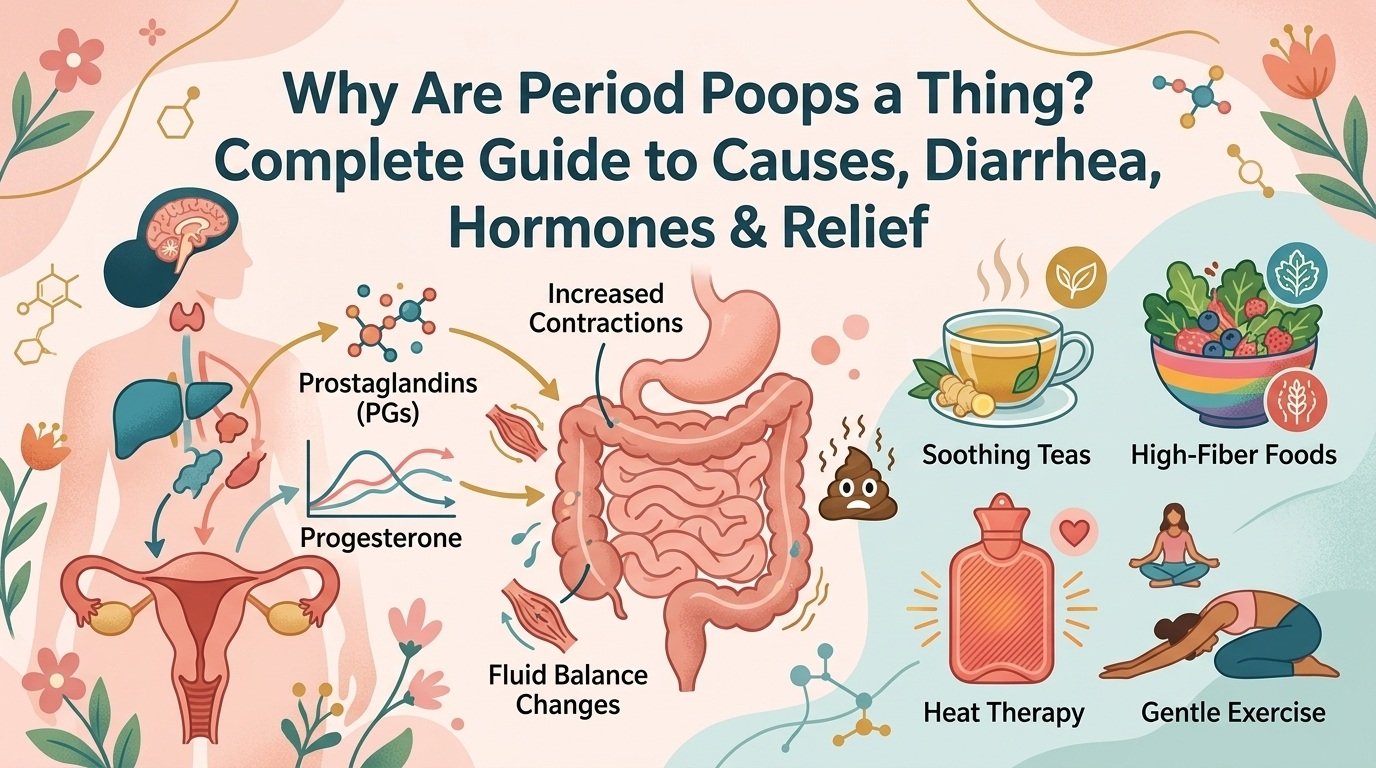
The key theory points to prostaglandins, a class of hormone-like compounds that promote contractions in your uterus during your period and influence menstrual hormone changes. These hormones have their effect elsewhere in your body. They can also alter the activity of the smooth muscle in your gastrointestinal tract, which can alter the speed of contents that’s passing through your intestines. An increase in bowel activity can make you feel an immediate urge to go or your stool may be looser.
Understanding why are period poops a thing can make these changes much less confusing. It also aids you in differentiating amongst the typical and cycle-related gastrointestinal symptoms from the bowel issues that might be happening at the same time. It’s common to encounter changes based on a cycle; however, significant pain, consistent diarrhea, blood in stool, and significant change in bowel habits should not always be attributed to your period.
Why Are Period Poops a Thing in the First Place?
The simplest answer to why are period poops a thing is that menstrual chemicals can affect both the uterus and the intestines. In the days before and during menstruation, prostaglandins trigger uterine contractions to help shed the lining. Because prostaglandins can also influence smooth muscle in the digestive tract, some people experience increased intestinal activity at the same time.
This could significantly alter your normal bathroom habits. You could poop more frequently or have a looser bowel movement, feel an unexpected urgent need or have diarrhea. For some, these changes are before bleeding starts, and for others they are in the first few days of the period.
Everyone is a little different. Some women notice little to no bowel changes, while others experience a predictable change every month, depending on their gastrointestinal health, sensitivity to hormone fluctuations, stress level, diet, and other conditions.
How Prostaglandins Affect Your Bowels
To understand why are period poops a thing, it helps to understand what prostaglandins actually do. Prostaglandins are hormone-like substances that are produced in tissues all over the body. They are involved in many body processes such as the inflammation response, pain, blood flow and in the process of contraction and relaxation of smooth muscle (including the muscles in the walls of the intestines). Prostaglandins help initiate the contractions of the uterus that lead to the shedding of the lining during the period.
However, when prostaglandins cause contractions in the intestines, this can lead to increased muscle contractions in the bowels.
Increased intestinal contractions speed up the movement of stool through the intestines and not enough water can be absorbed, resulting in loose stools.
This is one reason why are period poops a thing is closely connected to the question of why some people experience diarrhea during menstruation. The same general chemical environment responsible for uterine contractions can influence intestinal activity.
Another thing to remember is that just because you shouldn’t take this news as ‘prostaglandins are bad for you’, you shouldn’t automatically think that prostaglandins are bad either. They’re a perfectly normal, everyday part of many of our processes. The irritating impact on your digestion is simply about the location and extent of those chemical messages being received.
Why Do You Poop More Before Your Period?
Period poops timing is also a bit confusing, because bowel fluctuations can start before the first day of your period. This is because chemical and hormonal changes often start to happen before the visual cue of blood.
For some, prostaglandins (the chemicals involved in muscle contraction that help your uterus shed its lining) ramp up a bit as your period is starting, and it may affect your bowel movements as well. Changes in your hormones throughout your cycle also may play a role, and Ca stated that diarrhea and constipation can be part of PMS (premenstrual syndrome), which is thought to be caused by the hormonal changes of PMS.
This helps explain why are period poops a thing even when your period has not technically started yet. Your digestive system can respond to the physiological changes surrounding menstruation rather than simply responding to menstrual bleeding itself.
So you might find you have a bowel movement the day before your period arrives and then start making the bathroom trips more frequently during the first or second day of bleeding. This could be your body’s way of responding to your period and the pattern might repeat each cycle.
Why Do Periods Cause Diarrhea?
Diarrhea is one of the more noticeable answers to why are period poops a thing. When bowel contractions increase, stool may move through the intestines more rapidly. Faster transit can contribute to loose or watery stool.
Diarrhea and menstruation Diarrhea can even be a part of your periods, because prostaglandins can play a role in both. These chemicals can cause the uterus to contract more than usual and therefore lead to cramping, and their effect on the gut could be part of the equation for increased bowel movements. Diarrhea was listed as a symptom of painful periods by the Cleveland Clinic.
It also does not mean that all diarrhea episodes during that time frame are due to your period. Food poisoning, infections, medications, food intolerances, stress, and other conditions also can cause diarrhea. So, the timing is helpful but not a definitive factor.
If diarrhea happens regularly before or during your period and then stops after, changes in your period might be to blame, although digestive health symptoms should also be considered. If it extends over more than just a day or two, is particularly bad, accompanied by a fever or bleeding, or causing dehydration, another issue should be suspected.
Why Do Some People Get Constipation Instead?
The question why are period poops a thing does not always lead to diarrhea. Some people experience constipation around their menstrual cycle instead.
Due to different hormonal fluctuations it is possible to have varying intestinal movement too, and one study found progesterone can be the cause of slower bowel movement and constipation at certain times in the cycle. The Cleveland Clinic says progesterone can be responsible for constipation in some women at specific points in the cycle. So, one woman might be going less frequently and having runny stools at one point in her cycle while another feels bloated and constipated – but that doesn’t necessarily mean either of those things is happening to you.
Your individual cycle trend is usually more helpful than comparing your symptoms to someone else’s.
If you experience constipation at the same place in your cycle, it may be useful to track your pattern.
Why Do Period Poops Smell Worse?
Another reason people search why are period poops a thing is that they notice changes in stool odor. Menstruation itself does not necessarily make stool inherently foul-smelling, but several factors surrounding your period can change how your bowel movements smell.
What could cause it? Diet can be a factor. Hormonal shifts that affect your hunger, cravings, and dietary choices may cause some to consume more sugary, fatty, spicy, or processed foods near their period. Dietary changes can impact the breakdown of your food and stool features.
Rapid movement of the gut can also change how your body processes food. Increased stool frequency, diarrhea, constipation, and gut fermentation can all influence smell. Most short-term smell changes around the time of your period are not indicative of a disease.
Why Do You Feel Like You Have to Poop More?
The sensation of needing to poop repeatedly is another common part of why are period poops a thing. Increased bowel contractions can create a stronger sense of urgency.
Uterus and bowel are also physically close to each other. As the uterus and bowel are relatively close to each other in the pelvis, cramping and shifting pelvic sensations can also intensify urges to go to the bathroom. Some find that the movement of the bowel, the cramping, and the abdominal pain converge to give the sensation that a bowel movement is imminent even if the stool amounts are not significant.

Can Period Poops Cause Stomach Cramps?
Yes, changes in your bowel movements can happen at the same time as abdominal pain. The key is being able to differentiate between menstrual cramps and bowel-related discomfort Menstrual cramps occur due to uterine contractions which are stimulated by prostaglandins, which also have an effect on the digestive system. This means you may have cramping of the uterus, cramping of the bowel, urgency, bloating, and diarrhea all at the same time.
This overlapping discomfort is another reason why are period poops a thing can feel confusing. It may be difficult to determine whether a particular sensation is coming from the uterus, intestines, or both.
Tracking your symptoms across several cycles in a diary can be useful for understanding digestive health. Record when cramps start, when bowel changes occur, and when symptoms disappear. A repeated pattern can give your healthcare provider useful information if the symptoms eventually need evaluation.
Can IBS Make Period Poops Worse?
IBS and Crohn’s could worsen some menstrual digestive symptoms. If you already have a sensitive gut, you might notice menstrual changes in digestion, such as diarrhea or constipation, experience a worsening of symptoms, or have more abdominal pain and/or bloating than usual.
According to the Cleveland Clinic, if you experience IBS or Crohn’s, things such as period-related diarrhea could be worse. However, that doesn’t necessarily mean you have it, just that it could lead to symptoms being exacerbated.
The key isn’t necessarily the diarrhea, but rather what other issues may be occurring. If bowel movements are happening all the time and the symptoms seem worse around your period, talk to a doctor about the full range of your experiences.
If you are experiencing symptoms only around your period, the physiology of your menstrual cycle could be influencing the problem, but any severe or disruptive symptoms should be checked out by a professional rather than simply seen as the normal effects of your period.
Could Endometriosis Be Related to Painful Period Poops?
If bowel symptoms around menstruation occur along with particularly painful pelvic pain, painful bowel movements, pain during sex or other significant symptoms, endometriosis should be considered.
It is a condition in which tissue comparable to the lining of the uterus grows outside the uterus and near the bowel may have an association with gastrointestinal symptoms. Cleveland Clinic says individuals with endometriosis may have: Gastrointestinal symptoms, menstrual pain, pelvic pain and painful bowel movements.
This does not necessarily mean painful bowel movements during a period means endometriosis. For example, most people will have painful bowel movements during their period and common period symptoms.
The bottom line. Having to poop on your period but it hurts is usually not a cause for concern unless it is suddenly extremely painful every time you go, pelvic pain is affecting your quality of life, or symptoms are worsening. Seek medical attention for gynecologic concerns.
Does Diet Affect Period Poops?
Diet can influence bowel movements regardless of menstruation, so it can also affect how noticeable why are period poops a thing becomes for you.
2. Caffeine in coffee and other drinks can cause bowel movements to speed up for some people. If you are already having an increased intestinal activity prior to or during your period, it can make the feeling of urgency worse. Cleveland Clinic suggests cutting back on caffeine for people who are experiencing period loose stools.
3. Food cravings Food cravings can make you eat even more unhealthy foods than you might during the days approaching your period.
Heavy greasy foods, very hot spicy foods, sugar substitutes or other foods that are irritating to you could potentially make diarrhea or urgency worse for sensitive individuals.
How Can You Make Period Poops More Manageable?
If your changes to your bowel habits are less severe, some simple measures may provide relief. Drinking plenty of fluids is especially useful when you are having multiple episodes of diarrhea as stool depletes the body of water and electrolytes. Avoiding specific foods and drinks that clearly affect your stool can also be of use.
Limiting alcohol and caffeine if they seem to lead to diarrhea and the urge to go to the bathroom suddenly can help. Having stable meals and not over-eating foods known to cause discomfort can also reduce bowel discomfort. Gentle exercise is another intervention that is thought to be helpful in some cases of period discomfort.
Cleveland Clinic also recommends the application of heat to the lower abdomen and exercise for period pain. The intention is not to stop every change in the bowel, as this is not necessarily realistic. Instead, it is to minimize discomfort and stay observant of any unusual or extreme changes.
Should You Take Medicine for Period Diarrhea?
Medications I would take a medication for my diarrhea based on what I experienced, my history, other medications I took, and what the cause of it was. Diarrhea does not have to be medicated every month when your periods roll around. You could use over-the-counter medications or if that is not your thing, you could choose to go with other medication management and up your fluid intake with maybe some added healthy foods.
The more important thing to do is find out what is causing diarrhea when you have your period whether you have diarrhea every time and it is overwhelming, or whether this is sporadic and not a big deal but you want to know what is going on. Medications that contain NSAID’s may cause your periods to stop or slow down and not cause diarrhea and their use is up to how severe your symptoms are, if you are pregnant, have kidney issues or stomach issues, or you are on any other medications.
When Are Period Poops Not Something to Ignore?
The question why are period poops a thing is usually harmless when symptoms are mild, predictable, and limited to the menstrual period. The situation changes when bowel symptoms become severe or persist outside your normal cycle.
Don’t automatically assume you’re bleeding from your period One of the most common reasons to seek care is the presence of blood in the stool, says Cleveland Clinic, especially if you know for sure that it’s coming from the rectum and not the vagina.
Period pain accompanied by blood in the stool should be evaluated by your provider. Ongoing diarrhea that lasts too long, keeps coming back outside of your period, or occurs along with dehydration, severe pain in the abdomen, fever, or blood in your stool requires evaluation. Severe period pain Period cramps may be normal, but severe pain that interferes with normal activity is not something you simply need to tolerate.
How to Tell Whether Your Symptoms Follow Your Cycle
If you want to understand why are period poops a thing specifically in your case, tracking your symptoms over several menstrual cycles can be surprisingly useful.
Track the first day you notice bleeding, the days your bowel habits change, whether your stool is loose or hard, how often you go to the bathroom, if you cramp, and when things regulate again.
Also note any significant dietary, stress, medication, sleeping or other digestive changes outside of your period, to distinguish a menstrual pattern from a GI issue that is coincidentally more noticeable during your period.
For instance, if you always notice loose stools one day before your period, followed by two days of more frequent stooling and then everything settles down, that’s very different from someone who has diarrhea all month long and just happens to notice it more during menstruation.
Why Everyone’s Period Poops Can Look Different
There is no universal version of why are period poops a thing. One person may have several bowel movements each morning, another may experience one unusually loose stool, and another may become constipated.
Other people do not all respond in the same way to prostaglandins, either. There are all sorts of pre-existing digestive conditions, medications, stressors, diet, and common changes in bowel habits that can alter things. And even your own symptoms may change over time.
PMS varies at different ages, and the same menstrual cycle can change as a result of hormonal variations, medications, health issues, and other factors.
For all of these reasons, it is not reasonable to compare your menstrual experience to another person’s experience posted on the internet or to a friend’s for the purpose of determining whether your experience is “normal.”
The Bottom Line on Why Are Period Poops a Thing
So, why are period poops a thing? The main explanation is that the hormonal and chemical changes surrounding menstruation can affect the digestive tract as well as the uterus. Prostaglandins help the uterus contract and shed its lining, but they can also influence intestinal muscle activity. This can lead to more frequent bowel movements, urgency, softer stools, or diarrhea.
How hormones may influence bowel habits at different times in the menstrual cycle. You can develop constipation or changes in your bowel habits during other parts of the cycle, due to your hormones, but if you have a pre-existing bowel condition like irritable bowel syndrome, you are more likely to notice these symptoms.
For the vast majority of people, the stereotypical period poop is just part of the normal cycle, and the best strategy is to learn about your body, hydrate well with loose stool, troubleshoot the foods you consume, and be alert for bowel symptoms that are intense or prolonged.
Frequently Asked Questions
Why are period poops a thing if my digestive system and uterus are different?
Your uterus and digestive tract are different organs, but they can both respond to some of the same chemicals. The prostaglandins that trigger your uterus to contract can also affect the smooth muscle in your gastrointestinal tract, which might alter your bowel habits.
Why do I poop so much when I am on my period?
Increased prostaglandin activity can stimulate intestinal contractions, causing some people to have more frequent bowel movements during menstruation. The effect varies considerably between individuals.
Are period poops actually diarrhea?
Not necessarily. Period-related bowel changes can range from normal or more frequent stools to loose stools and diarrhea. Constipation can also occur at other points in the menstrual cycle.
Why do period poops hurt?
You may have menstrual cramps together with painful BM’s because prostaglandins have an impact on the uterus, but they can also impact the intestines. That said, painful BMs at any time can be a symptom of endometriosis or other problems that merit investigation.
Can coffee make period poops worse?
It can. Caffeine may stimulate bowel activity in some people, so drinking coffee when your intestines are already more active around menstruation may increase urgency or loose stools.
Why do I get period poops every month?
The predictable monthly course may mirror your body’s cyclic response to menstrual hormonal and prostaglandin fluctuations. If mild and dissipating as your period ends, they are probably normal. A new or more intense pattern should be evaluated.
Should I see a doctor about period poops?
See a doctor if your bowel symptoms are intense, last more than your period, keep recurring and seriously disrupt your daily routine, or occur with blood in the stool, fever, dehydration, extreme cramp or abdominal and pelvic pain or other abnormal signs.











