


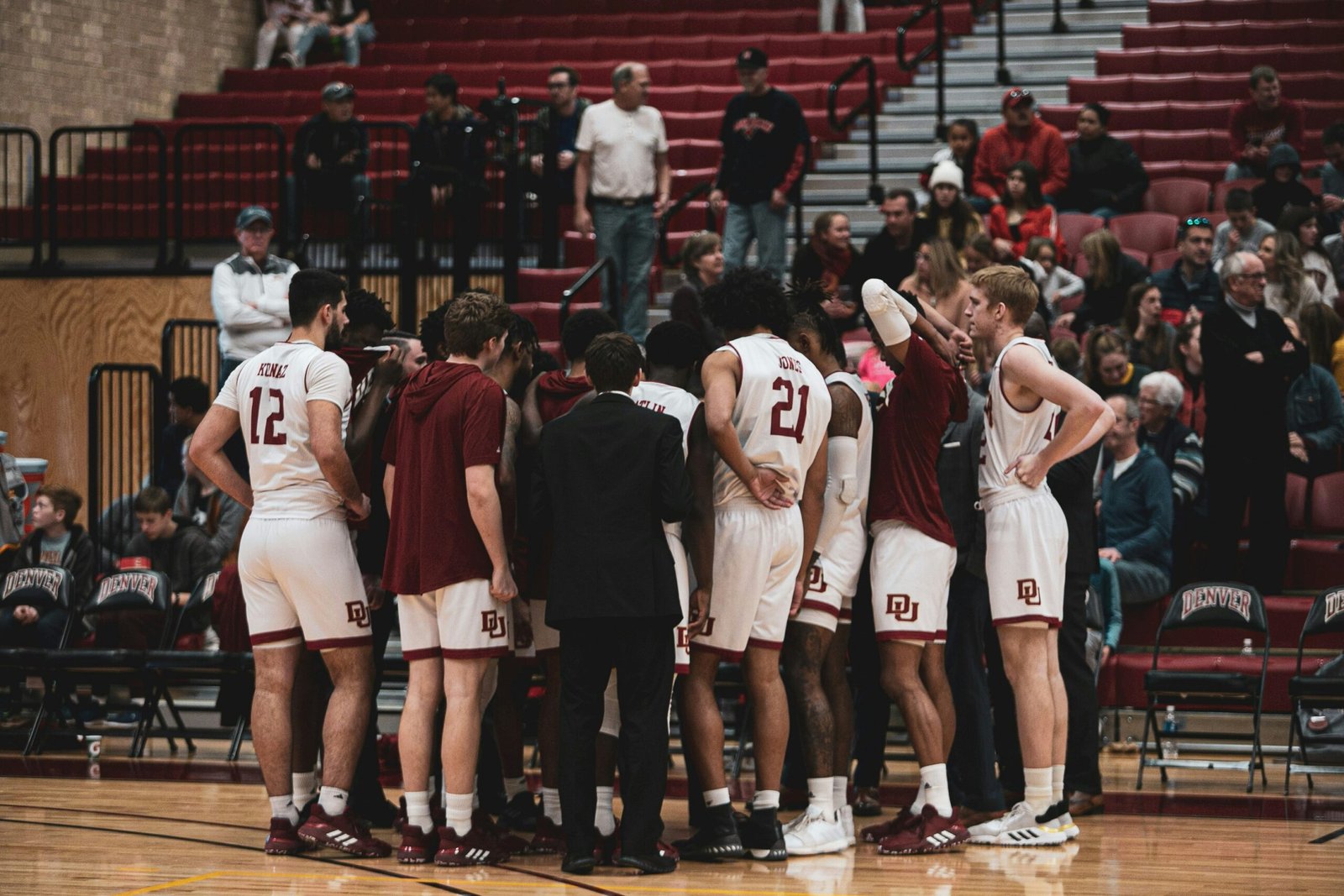
The discussion on whether or not college athletes should be paid has shifted drastically over the past couple years. For long years, it was a model that said that the athletes were students who competed in intercollegiate sports for the benefit of education and athletics. That has been harder and harder to say, as college sports have gotten more and more commercial, especially at the upper levels.
If you are researching why college athletes should not be paid, however, it is important to understand that this position is not simply about saying athletes deserve nothing. It boils down to: Should athletes get direct pay, and will providing that pay be problematic for students, institutions, teams, and colleges’ educational purpose? However, the question has grown more complicated.
NCAA Division I programs now can offer major institutional payouts to student-athletes under the House settlement, approved in federal court, and student-athletes also can get paid for their name, image and likeness under NCAA guidelines. In short, the full discussion these days is less about whether the athletes should get any payout than it is about how much, where and to whom that payout goes, and whether college sports will become more like the pros.
That distinction matters when examining why college athletes should not be paid. There are five main reasons offered in opposition to direct pay, regarding college’s educational objectives, disparities of athletic earnings, competitive fairness, the burden placed on universities, the danger of transforming students into employees and whether pay could alter the purposes of college athletics. Each of these reasons has its flaws, and a keen observer should study those flaws.
The Central Argument Behind Paying College Athletes
To understand why college athletes should not be paid, it helps to define what “paid” means. At the same time, a student-athlete might be getting a scholarship, help with housing, food and expenses, academic help, medical care, or an NlL payment, and not directly be getting “paid” for playing his or her sport. These benefits can be quite different.
The NCAA says athletic scholarships can pay for tuition, fees, room and board, and books related to the course of study, although the details may differ from division to division, sport to sport and school to school. Other help can include academic assistance, healthcare, career development, food assistance and other benefits. Those benefits are a major part of the financial relationship between college athletes and the university.
The traditional argument against direct pay is, therefore, that college athletes already get significant educational benefits and athletic benefits from taking part in the sport, including college athletic scholarships. In that argument, adding traditional wages could turn the scenario of playing a sport into something much more akin to a job. A football player at a major Division I program operates in a very different environment from an athlete competing in a smaller sport at a school with limited athletic revenue. A useful discussion of why college athletes should not be paid therefore has to recognize that “college athlete” does not describe a single economic situation.
Why College Athletics Was Historically Different From Professional Sports
One of the main arguments behind why college athletes should not be paid is that college athletics traditionally served an educational purpose rather than functioning as a professional league.
College athletics can, and does, enhance that goal. It offers those students a chance to compete, learn discipline, participate in team camaraderie, travel, and represent their college community. In that view, the athletics component is only a part of the total college experience, and not the whole of it.
The problem is that direct pay rates could undermine that concept. If colleges and universities allow themselves to view their athletes as paid performers, then the appearance and commercial value of those athletes will matter more than the education they received. Schools will put their resources into recruiting paid-for athletes to maximize commercial income, and diminishing resources to non-income-producing schools.
That does not mean people who wish to pay college athletes cannot do so, but the supporters of the existing system believe education should remain the centerpiece of college athletics rather than a side attraction.
Direct Salaries Could Create Greater Financial Pressure on Schools
Another important argument in why college athletes should not be paid concerns the financial structure of college athletics.
“Other expenses for athletic programs can include coaching wages, facilities, buses, medical services, equipment, academic assistance, recruiting, compliance, insurance and other team expenses. Not all athletic programs may have enough revenue to offset these costs. If schools were required to pay a traditional salary to every athlete, the financial strain could prove especially challenging for programs with less financial resources, leading to some schools eliminating sports, reducing staffing, increasing reliance on institutional support, or cutting programs with less marketability,” said the House settlement.
The House settlement does set a precedent that some Division I schools may pay athletes direct monetary gains, with the initial annual limit for those programs at approximately $20.5 million per school for 2025-26 based on the settlement.
This system would not mean a never ending market of salaries, but rather a legal way to compensate athletes without sacrificing other resources that help students. The money question is still significant because a system can help some while putting stress elsewhere in the university.
Competitive Balance Is Another Major Concern
Competition is essential for college sports. When dollars decide which programs can recruit and keep athletes, wealthier programs are likely to have an edge over less-wealthy colleges.
This is another argument frequently raised when discussing why college athletes should not be paid. Supporters of the position worry that direct compensation could make recruiting increasingly dependent on financial resources rather than coaching, academic opportunities, team culture, location, facilities, or an athlete’s personal development goals.
There already exists significant differences in the levels of athletic monetary resources that college programs have. A big school with media deals and a lot of commercial exposure can afford to pay athletes differently than a small school.
Direct pay may not necessarily lead to extreme unfairness in competition but it could highlight the disparity in school resources. When athletes can compare offers and offers from schools based on large institutional payments, wealthier institutions might have more to say in competing for a coveted athlete. The real issue is not going to be whether or not the athletes should be paid but how to pay them so that competition between different schools and different sports continues to be meaningful.
Paying Athletes Could Change Recruiting
Recruiting has become one of the single most important aspects of college athletics already. Coaches have to assess prospects, develop rapport with prospective student athletes, provide scholarship opportunities and compete with other programs.
A direct-pay system adds a complication to those judgments, particularly as college athlete compensation becomes part of recruiting decisions. Instead of simply asking which school provides the best balance of education, athletics and opportunity, athletes might compare checks.
That’s not necessarily crazy. Students do compare financial aid offers in the college process. But traditional colleges are concerned that the large athletic payments will turn recruiting into something more like pro free agency.
This is an important issue when considering why college athletes should not be paid because recruiting consequences can extend beyond the athletes receiving money. A major shift in recruiting incentives could affect coaching strategies, roster construction, transfer decisions, and the ability of smaller programs to retain athletes.
The NCAA has already made a significant amount of changes to its rules to adapt to this new environment. Student-athletes currently are permitted to earn money from NIL opportunities, and other rules govern some third-party agreements and compensation.
Education Could Become Secondary
Another argument is about academic priorities. College athletes already have a lot to do. They are usually practicing, competing, traveling, weight lifting, meeting, getting better, helping other people, and going to school. University of California, Los Angeles, athletes, for example, are required to remain in good academic standing, including the ‘progress-toward-degree’ standards set by the National Collegiate Athletic Association (NCAA) Division I program.
If direct payment becomes a big part of the college experience, athletes may feel more financial pressure to think of themselves as athletes rather than students. Imagine a college student who’s already being paid for playing their sport. That person’s immediate financial reward might become highly related to staying on the team and continuing their success as an athlete. This could make academic decisions more complicated, especially if schoolwork and sport don’t line up.
This isn’t an argument that athletes can’t manage both. They do. The concern is that more commercialization could shift the emphasis away from the importance of school.
For people researching why college athletes should not be paid, this is one of the strongest philosophical arguments: college should remain a place where athletics supports education rather than replacing it.
Not Every Athlete Generates Revenue
A big flaw in overly simplistic discussion of pay for college athletes is the premise that they all play pay-for-profit sports. There are football, men’s basketball, women’s basketball, baseball, softball, soccer, volleyball, swimming, track & field, gymnastics, wrestling, tennis, golf, etc, and they all have very different relative commercial value. – some generate large TV or sponsorship revenues; others simply exist because the schools need them for “educational”, “competitive”, “community”, or “institutional” value. Pay every athlete based on the commercial value of the sport, and differences are likely to be huge.
Pay every athlete exactly the same amount, and there’s another question: is equal pay an appropriate compensation mix for all sports that generate such unequal revenue? – which is why we can’t simply compare athletes to workaday workers on a football field.
Professional sports leagues are generally designed around commercial racecourses and revenue sharing. But colleges have more organic goals that can include education and support for many sports.
The Professionalization Concern
Another reason people give when explaining why college athletes should not be paid is concern about professionalization.
Professional sports have established systems for contracts, salaries, collective bargaining, free agency, roster rules, trading, and employment relationships. College sports were traditionally based on an entirely different model.
If college athletes would be paid salaries by colleges, it would be difficult to differentiate between college sports and professional sports.
Some view it as an improvement-after all, college sports already rake in a lot of money from the marketplace. Others worry pro sports would erode the uniqueness of college athletics.
The answer comes down to what society believes the overall purpose of college athletics should be. If education through competition is the main goal, direct pay to athletes might be seen as a bad fit. If pure entertainment, with the exposure to that entertainment provided by a university, is the goal, pay would seem more appropriate.
Scholarships Are Still an Important Part of the Discussion
When considering why college athletes should not be paid, it is important not to overlook scholarships and other educational benefits.
– Category: For|Related Reading Page Count: 3 Printable:Yes More The Education The NCAA awards athletic scholarships to hundreds of thousands of student-athletes, according to its website, and it says many student-athletes are awarded only a partial athletic scholarship. The worth of an educational opportunity can be different than the worth of cash wages. Tuition funding can eliminate a heavy expense while providing an athlete with a diploma that will be important well after their playing days are over.
And the long term does matter: Most college athletes will not have even a brief run in professional sports.
For many, the degree and academic experience, the contacts and friendships, the professional training and network – a quality college experience – will be more valuable than the athlete’s years of competition. That may not remove the case for compensation, but it might help explain why those supporting the current model preach total educational value and not salary.
Direct Pay Could Increase Pressure on Young Athletes
Because of their young adult development stage, college athletes are already making some of the biggest decisions of their lives at the intersection of education, work, finances, and identity. It’s made more complicated with higher monetary stakes.
And as everyone with a stake in the athlete’s performance or reputation can call on that student for favor, additional financial incentive can become a factor-whether it concerns a coach, parent, agent, fan, or sponsor.
Things get even thornier when those financial stakes are based on or connected to the athlete’s game. If an athlete’s value (say, as indicated by their stats or injured status or wins) is subject to fluctuation, the financial pressure is built right in.
For that reason, any system for payments must do two things: provide clear and effective boundaries, and be transparently regulated. How the athlete gets paid is as much a concern as how much.
Why “No Pay” Does Not Necessarily Mean “No Financial Benefits”
A major mistake in discussions of why college athletes should not be paid is treating the issue as an all-or-nothing choice.
NIL considerations were inevitable in today’s post–”Armour” world, where the NCAA has, among other things, opened NIL opportunities for athletes in the form of permissions to monetize commercial use of their names, images, and likenesses consistent with existing rules. The House agreement also established a pathway by which participating Division I schools would be permitted to pay athletes directly.
As a result, someone researching why college athletes should not be paid should distinguish between three separate questions: whether athletes should receive educational benefits, whether they should earn independent NIL income, and whether universities should pay athletes directly for their athletic participation.
Those are different policy questions. Combining them can make the debate unnecessarily confusing.
The Argument About Amateurism Has Changed
Amateurism was once a defining feature of the NCAA’s college sports model. Amateurism was based on the idea that college sports should be entirely separate from professional sports and that athletes, generally, shouldn’t be compensated for their athletic performance. That model has been flipped on its head.
The 2025 approval of the House settlement established a new Division I landscape where schools can now offer direct financial incentives to athletes.
The settlement also resolved underlying monetary damages relating to NIL and other benefits.
Therefore, an article explaining why college athletes should not be paid should not present amateurism as though the NCAA’s historical model remains completely unchanged. It is more accurate to discuss amateurism as a philosophical argument about the identity of college sports rather than as a simple description of current NCAA rules.
A Better Way to Evaluate the Issue
If you are trying to understand why college athletes should not be paid, the most useful approach is to separate principles from practical consequences.
The principle is that college sports are about education. The less tangible worry is that direct payoffs create financial stress, competitive advantages, recruiting inequities, and compliance burdens.
But the opposed sets of concerns aren’t entirely wrong. College athletes can generate huge commercial value for schools and athletic conferences. And in the past, some athletes have argued that they weren’t getting a fair share of the value they created.
The current system is a balancing act. It tries to hold onto a college sports model based on education, while still giving athletes more money.
That means the “policy” becomes about how to build it, not whether to build it.
Common Mistakes in the College Athlete Pay Debate
Another frequent error is believing that college athletes are uniformly in a big-money program. College sports are far more diverse than that, making college sports programs an important part of the broader discussion. A second mistake is conflating the concepts of NIL with pay.
NIL money is contingent on the commercial use of the athlete’s name, image and likeness, while direct-to-institution payments are based on an alternative idea.
A third mistake is taking older interpretations of NCAA rules.College athlete compensation rules have changed rapidly, especially since 2024 and 2025. Anyone researching why college athletes should not be paid should check the date of the information being used.
A fourth mistake is assuming that compensation automatically improves or destroys college sports. The effects depend on how the system is designed, which schools participate, how revenue is distributed, what protections exist, and how academic responsibilities are maintained.
What a Sustainable College Sports Model Could Look Like
The most robust version of the alternative case isn’t that we need to get rid of all the money. It’s that we can have a system that keeps education at the forefront and still provides athletes with some fair economic incentives.
In that kind of world, scholarships, training and academic support, access to health care, career preparation and NIL opportunities would still be available, but there would be a formal set of rules that covers how much money colleges can receive.
The vision here is that we want to avoid college sports being rivaled to pay-to-play professional leagues while also acknowledging that athletes are very much part of a cash crop.
That middle ground is crucial because the current NCAA system has already experienced a series of economic and legal shifts toward athlete compensation. It’s not realistic or desirable to try to take all that away.
Why College Athletes Should Not Be Paid: The Core Reasoning
The central argument in why college athletes should not be paid is not necessarily that athletes have no economic value. Instead, it is that traditional salaries could change the purpose and structure of college athletics.
Proponents of that stance believe schools should focus on education, athletic scholarships and in-house benefits are worth something, direct salaries might bring greater financial disparity among schools, and a professionalized compensation structure could change recruiting and competition. Meanwhile, those points take a back seat in the face of what college sports have become today.
Division I NCAA athletes can earn the financial equivalent of thousands of dollars, monetize NIL opportunities and compete in a radically transformed environment that has little of the amateurism focus of the past. That can help readers explore the issue without the outdated assumptions.
What Readers Should Consider Before Forming a Position
Anyone evaluating why college athletes should not be paid should first decide what they believe college sports are supposed to accomplish.
If the primary goal is education, then the issue of maintaining opportunities for learning and preserving the link between athletics and education may be most important. If economic fairness is the primary goal, then the issue of how much revenue different programs and athletes generate may be paramount. If competitive balance is the goal, then the issue of athletic programs’ and institutions’ relative resources and salaries may take precedence. If athlete independence is the goal, then the issue of NIL rights and athletes’ ability to profit from their own commercial image may be the most crucial.
Conclusion
The debate over why college athletes should not be paid has become more complicated because the college sports system itself has changed. The old arguments focused on amateurism, education, scholarships, and separating college athletics from professional sports. Those principles still matter to the policy debate, but now the NCAA’s division I structure allows significant financial gains and institutional payments under the House settlement.
The strongest arguments against traditional salaries argue in favor of preserving the educational goal of college athletics, limiting financial strain on athletic departments, protecting competitive balance, preventing a financial race for athletes, and maintaining a line of separation between college and professional sports. But those are quite different from the assertion that college athletes should not receive any money-there are now scholarships, NIL access, educational assistance, health expenses, and direct institutional benefits.
Ultimately, understanding why college athletes should not be paid requires more than repeating an old amateurism argument. Readers need to consider how compensation affects education, athletes, universities, recruiting, competition, and the future structure of college athletics. Looking at those factors separately provides a much clearer foundation for understanding this evolving debate.
Frequently Asked Questions
Is the argument that college athletes should not be paid still relevant?
Yes, as a policy debate, but not as a practical matter. Under NCAA Division I rules, there is already a substantial material benefit to athletes (athletes can be paid, in the case of the House settlement, by the school). The issue has turned to the details of pay and limitations.
Do college athletes receive financial benefits even without direct salaries?
Yes. Athletic scholarships can cover educational expenses, and student-athletes may receive additional forms of academic, medical, nutritional, and career support. NCAA rules also permit NIL opportunities under applicable requirements.
Does NIL mean college athletes are employees?
NIL does not necessarily equal employment. The general definition of NIL refers to pay relating to the commercial use of an athlete’s name, image or likeness. Because the legal status of college athletes has been challenged in courts and legislative bodies over the years, employment inquiries are subject to up-to-date legal research.
Why do some people oppose direct salaries for college athletes?
Among the usual complaints are the impact on the educational mission of the university, economic impact on the athletic department, imbalance in competitiveness, recruiting inducements, and the potential for college sports to become more and more like the professional games.
Are all college sports financially profitable?
No. College sports vary substantially in revenue and expenses. Some programs generate major commercial revenue, while others operate with different financial models and may require institutional or conference support.
Can college athletes make money from their name, image, and likeness?
Yes. NCAA rules permit NIL opportunities, subject to applicable requirements. The NCAA also distinguishes legitimate NIL compensation from prohibited pay-for-play arrangements and compensation that falls outside permitted standards.
Has the NCAA changed its position on athlete compensation?
The NCAA’s division I rules structure is fundamentally different. A House settlement, approved by a court in 2025, paved the way for schools that joined the deal to give athletes direct cash payments; other rules lay out specifics for NIL contracts and other forms of athlete payment.











