


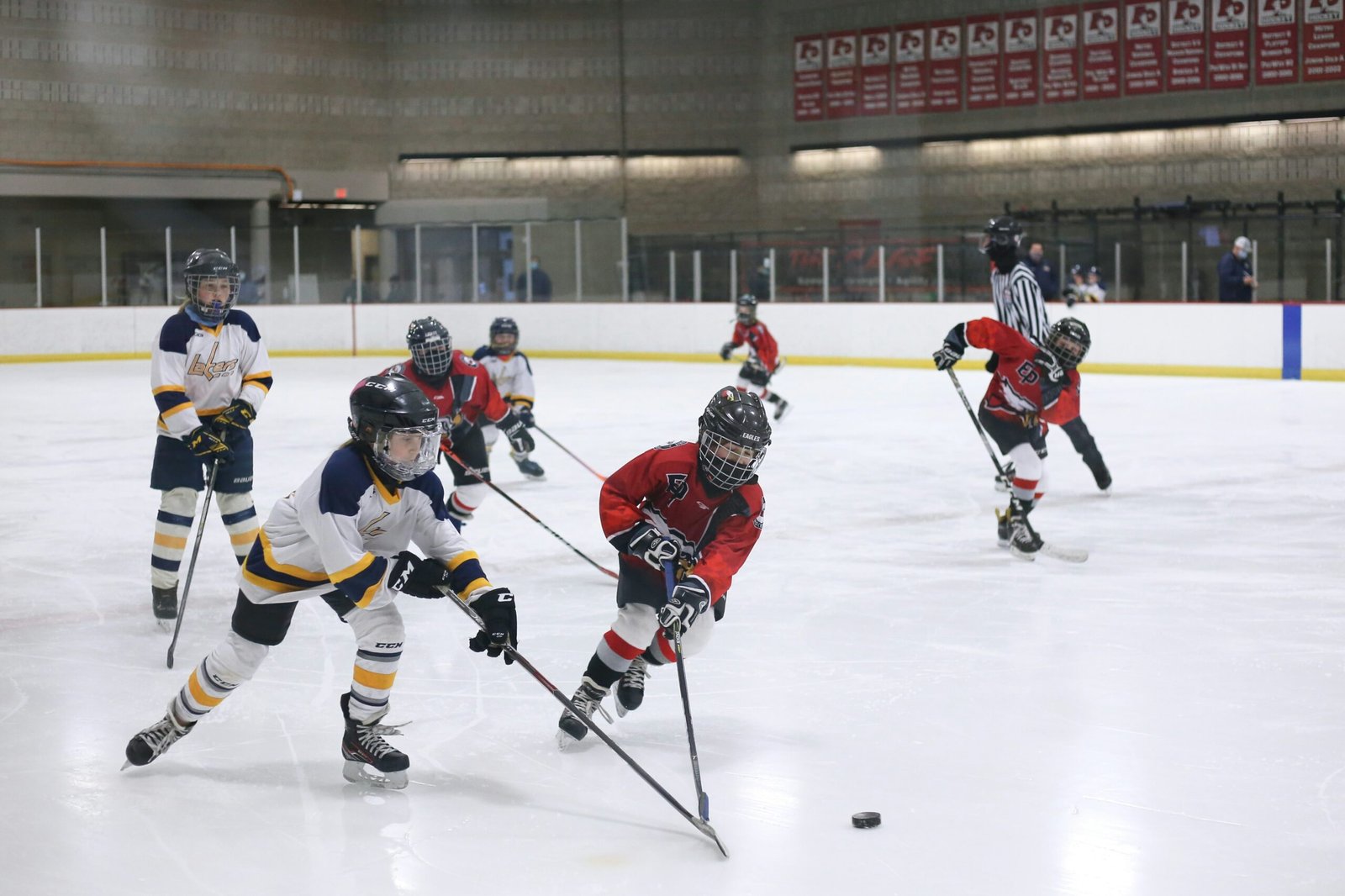
A standard ice hockey game has 60 minutes of regulation playing time, divided into three 20-minute periods. However, the full event usually takes much longer because the clock stops during whistles, two intermissions separate the periods, and overtime may be needed.
For a professional ice hockey game, a practical estimate is about 2 to 2½ hours from puck drop to the final result, although reviews, injuries, stoppages, and overtime can extend it. If you are attending in person, allow additional time for parking, security, warmups, concessions, and leaving the arena.
The answer changes if you mean field hockey. Under the current International Hockey Federation rules, a field hockey match consists of four 15-minute quarters, also totaling 60 minutes of regulation play, with short breaks between quarters and a longer halftime.
Quick Answer
| What you mean | Typical duration |
| Ice hockey regulation play | 60 minutes |
| NHL regulation structure | Three 20-minute periods |
| NHL intermissions | Two 18-minute breaks under standard rules |
| Typical professional ice hockey event | About 2 to 2½ hours, but variable |
| NHL playoff game | Can run much longer with repeated overtime |
| Field hockey regulation play | Four 15-minute quarters, or 60 minutes |
| Youth or recreational hockey | Depends on age group and local rules |
| Full arena visit | Add arrival, parking, entry, and departure time |
The most important distinction is between playing time and elapsed time. A scoreboard may show 60 minutes of regulation, but those minutes are played on a stopped clock.
Is an Ice Hockey Game Really 60 Minutes?
Yes, but only in terms of regulation playing time.
Ice hockey regulation consists of:
- First period: 20 minutes.
- First intermission.
- Second period: 20 minutes.
- Second intermission.
- Third period: 20 minutes.
That produces 60 minutes on the game clock. The clock stops whenever the referee blows the whistle, such as after a goal, penalty, icing call, offside, injury, or puck leaving the playing surface.
As a result, a 20-minute period does not take exactly 20 minutes of wall-clock time. Stoppages, faceoffs, commercial breaks, video reviews, and other interruptions add to the event.
This is why the answer to “how long is a hockey game?” should not be simply “60 minutes.” Sixty minutes is the formal playing time; the complete event is longer.
How Long Is an NHL Game?
An NHL game has three 20-minute regulation periods and two standard 18-minute intermissions unless the league announces a different arrangement.
NHL game structure
| Component | Standard time |
| First period | 20 minutes |
| First intermission | 18 minutes |
| Second period | 20 minutes |
| Second intermission | 18 minutes |
| Third period | 20 minutes |
| Regulation playing time | 60 minutes |
| Scheduled period breaks | 36 minutes total |
The fixed components alone account for 96 minutes, before ordinary stoppages, media timeouts, reviews, and delays are included. This is why a regulation NHL game generally takes much longer than 96 minutes from puck drop to the final horn.
A reasonable planning estimate is around 2 to 2½ hours for a typical professional game, but there is no universal end time. Some games finish sooner, while others run longer because of overtime or extended stoppages.
Why Hockey Games Take Longer
Stop-time clock
Ice hockey uses a stop-time clock. The clock stops for events such as:
- Goals.
- Penalties.
- Icing.
- Offside.
- The puck leaving the rink.
- A goalie freezing the puck.
- Injuries.
- Equipment problems.
- Video reviews.
The clock restarts when play resumes at the next faceoff or restart.
Intermissions
Two intermissions occur after the first and second periods. Players return to the locker room, coaches make adjustments, and arena staff may maintain the ice surface.
Commercial and media timeouts
Professional games include scheduled media breaks. These often occur during normal stoppages, so they do not appear as separate periods on the scoreboard, but they add to the total event time.
Reviews and challenges
A disputed goal, offside decision, or coach’s challenge can pause the game while officials review the play. Most reviews are relatively short, but unusual situations can take longer.
Injuries and arena delays
Medical attention, damaged boards, broken glass, ice problems, or equipment issues can delay the next faceoff.
Penalties
A two-minute penalty does not automatically add two minutes to the final game duration.The player serves the penalty as the game continues. However, the whistle, faceoff, special-teams play, and any related stoppages can affect the elapsed time.
How Long Is Hockey Overtime?
Overtime depends on the league and competition.
NHL regular season
When an NHL regular-season matchup is still tied after regulation:
- The teams play a five-minute sudden-death overtime.
- The format is normally 3-on-3, excluding goalies.
- The first team to score wins.
- If overtime produces no goals, the teams compete in a shootout to determine the winner.
A shootout can add time, but it is not another full regulation period.
NHL playoffs
The NHL playoffs use a different format. When the score is still even after three periods:
- Teams play 20-minute sudden-death overtime periods.
- Play is generally 5-on-5, subject to penalties.
- If no goal is scored, another overtime period follows.
- The game continues until one team scores.
NHL postseason games do not use the shootout format used in regular-season games. A playoff game can therefore run well beyond the normal 2½-hour planning window. Current playoff explanations describe repeated 20-minute overtime periods separated by additional intermissions until a goal is scored.
Overtime comparison
| Situation | Overtime format | Effect on total duration |
| NHL regular season | Five-minute 3-on-3 overtime, then shootout if necessary | Usually adds a short extra period |
| NHL playoffs | Repeated 20-minute sudden-death periods | Can add one or several full periods |
| College hockey | Depends on regular-season and postseason rules | Check the competition’s current rules |
| Youth hockey | Some games may have short overtime, a shootout, or no overtime at all. | Check the local league or tournament |
| Recreational hockey | League-specific | Rules vary significantly |
How Long Is Field Hockey?
Field hockey also consists of 60 minutes of regulation time, although the game is structured differently from ice hockey.
Under the FIH Rules of Hockey effective March 2026, a field hockey match consists of:
- Four 15-minute quarters.
- A two-minute interval between the first and second quarters.
- A 10-minute halftime interval.
- A two-minute interval between the third and fourth quarters.
That creates 60 minutes of regulation play and 14 minutes of scheduled breaks, for a minimum scheduled structure of 74 minutes before additional stoppages or competition-specific procedures.
The FIH rules also state that other period or interval lengths may be agreed or specified by competition regulations.
Ice hockey vs. field hockey
| Feature | Ice hockey | Field hockey |
| Regulation structure | Three 20-minute periods | Four 15-minute quarters |
| Regulation playing time | 60 minutes | 60 minutes |
| Standard breaks | Two intermissions | Two short quarter breaks and halftime |
| Clock behavior | Stop-time format in major competitions | Rules include specific stoppage procedures |
| Tie resolution | Overtime or shootout depending on competition | Draw or shootout depending on competition |
| Typical setting | Ice rink | Outdoor or indoor field |
Do not use ice-hockey timing to answer a field-hockey question. The sports share the word “hockey,” but their period structures and timing rules differ.
How Long Are College and Youth Hockey Games?
College hockey
In college ice hockey, regulation play is usually divided into three 20-minute periods. Intermission lengths and overtime procedures can vary by competition. NCAA rule materials describe intermissions of 12 or 15 minutes in applicable rules documents.
For a college game, check:
- The current NCAA or conference rules.
- Whether it is regular season or postseason.
- The tournament’s tie-breaking format.
- Arena-specific scheduling.
The overtime format in college hockey may differ from the NHL, so check the rules for the specific competition.
Youth hockey is especially variable because period lengths often depend on age, skill division, tournament format, and available ice time. For a clearer understanding of hockey game duration by age and level , consider how different leagues structure their games.
High school hockey
High school hockey often uses three periods, but the exact duration can vary by state association, league, and tournament. Some competitions may use shorter periods, running time, or fixed event limits.
Parents and spectators should rely on the official schedule rather than a general internet estimate.
Youth hockey
Youth hockey is especially variable because period lengths often depend on age, skill division, tournament format, and available ice time.
Youth games may include:
- Shorter periods.
- Running time.
- Time limits for tournaments.
- Short overtime.
- A shootout.
- No overtime in certain regular-season games.
USA Hockey rules and tournament materials demonstrate that game-length requirements can differ by age group and competition stage.
Comparison by level
| Level | Common structure | What to check |
| NHL | Three 20-minute periods | Intermissions and overtime |
| Minor professional | Usually three 20-minute periods | League and venue rules |
| College | Three 20-minute periods | Conference and postseason format |
| High school | Often three periods | State or league rulebook |
| Youth | Age-based period lengths | Division and tournament limits |
| Recreational | League-specific | Running-time and tie rules |
How Much Time Should You Allow at the Arena?
Professional regular-season game
For the game itself, reserve approximately 2½ to 3 hours from puck drop to the final result. That gives you a reasonable buffer for ordinary stoppages and a possible overtime finish.
Also allow time for:
- Parking or public transportation.
- Security screening.
- Ticket scanning.
- Finding your seat.
- Restrooms and concessions.
- Postgame crowd movement.
Arriving 30–60 minutes before puck drop is a practical choice at an unfamiliar professional venue.
Playoff game
Allow substantially more flexibility. One overtime period adds more than just 20 minutes because playoff overtime includes a break before play resumes. Several overtime periods can push the finish well beyond midnight for a late-starting game.
Youth or tournament game
Follow the posted schedule. Youth tournaments may impose hard time limits so the next game can begin on time.
Example schedule
For a 7:00 p.m. professional puck drop:
- 6:00–6:30 p.m.: Arrive for parking and entry.
- 7:00 p.m.: Puck drop.
- First period and stoppages.
- First intermission.
- Second period and stoppages.
- Second intermission.
- Third period.
- Around 9:00–9:30 p.m.: Possible regulation finish.
- Later finish if overtime is needed.
This is an illustration, not a guaranteed schedule.
How Long Is a Hockey Broadcast?
A broadcast usually lasts longer than the live game because it may include:
- Pregame coverage.
- Team introductions.
- Warmup footage.
- Commercial breaks.
- Intermission analysis.
- Postgame interviews.
- Highlights and commentary.
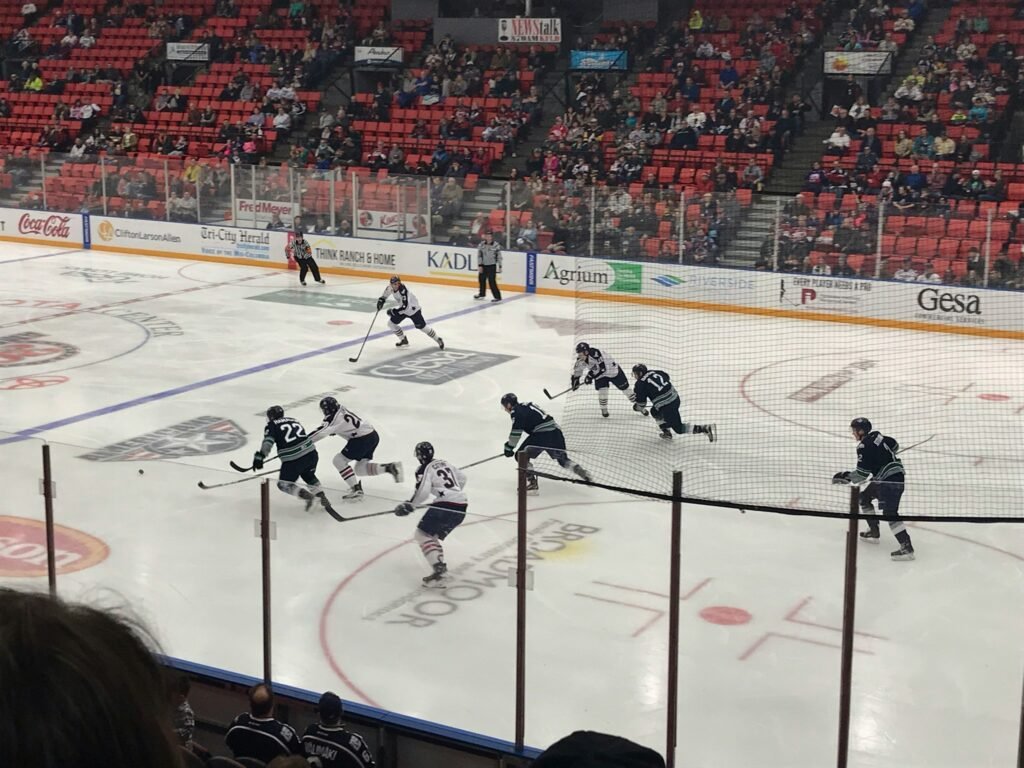
If a television listing says a game starts at 7:00 p.m., check the program window. The broadcast may begin before puck drop and continue after the final horn. A broadcast usually lasts longer than the live game because it may include pregame coverage, team introductions, warmup footage, commercial breaks, intermission analysis, postgame interviews, and highlights.
Common Misunderstandings
“A hockey game lasts exactly 60 minutes.”
Regulation play lasts 60 minutes. The event does not.
“Every hockey game lasts 2½ hours.”
That is a useful professional-game estimate, not a rule. Youth, recreational, college, field hockey, and playoff games can follow different timelines.
“All intermissions are 18 minutes.”
NHL intermissions are normally 18 minutes, but other leagues may use 12, 15, or different break lengths.
“A shootout is always used to settle a tied game.”
NHL regular-season games may use a shootout. NHL postseason games go into sudden-death overtime when they remain tied after regulation.
“Penalty minutes are added to the game.”
A penalty is served during play. It does not simply extend the game clock by the stated penalty length.
“Field hockey has three 20-minute periods.”
Field hockey uses four 15-minute quarters under current FIH rules.
Frequently Asked Questions
Warmups before the game
A professional ice hockey game generally runs for about 2 to 2½ hours, including stoppages and intermissions.
Stoppages, reviews, injuries, overtime, and shootouts can make it longer.
Is a hockey game 60 minutes?
A standard ice hockey game includes 60 minutes of regulation play across three 20-minute periods. The clock stops during many interruptions, so the event lasts longer.
How long are NHL intermissions?
Standard NHL intermissions are 18 minutes unless the league announces otherwise.
How long is NHL overtime?
Regular-season overtime is five minutes long, and a shootout is used if the score is still tied afterward. NHL playoff overtime uses repeated 20-minute sudden-death periods until a goal is scored.
How long is a field hockey game?
A field hockey match consists of four 15-minute quarters, totaling 60 minutes of regulation play under the current FIH rules. The scheduled breaks include two two-minute intervals and a 10-minute halftime.
How long are youth hockey games?
Youth-game length depends on the age division, league, tournament, and local rules. Some games use shorter periods or fixed time limits.
What Time Should You Arrive at a Hockey Game?
For a professional game, arriving 30–60 minutes before puck drop is sensible. Plan to arrive earlier if you are dealing with parking, security checks, or a venue you have never visited before.
Conclusion
So, how long is a hockey game? Although regulation ice hockey is 60 minutes long, a professional game usually lasts roughly 2 to 2½ hours once intermissions and stoppages are included. NHL playoff games can run much longer because overtime continues in 20-minute sudden-death periods until someone scores.
Field hockey also has 60 minutes of regulation play, but it uses four 15-minute quarters. College, youth, high school, and recreational formats may use different breaks, period lengths, and overtime rules. For the most accurate estimate, check the specific league or event schedule and allow extra time for arrival and departure.











