


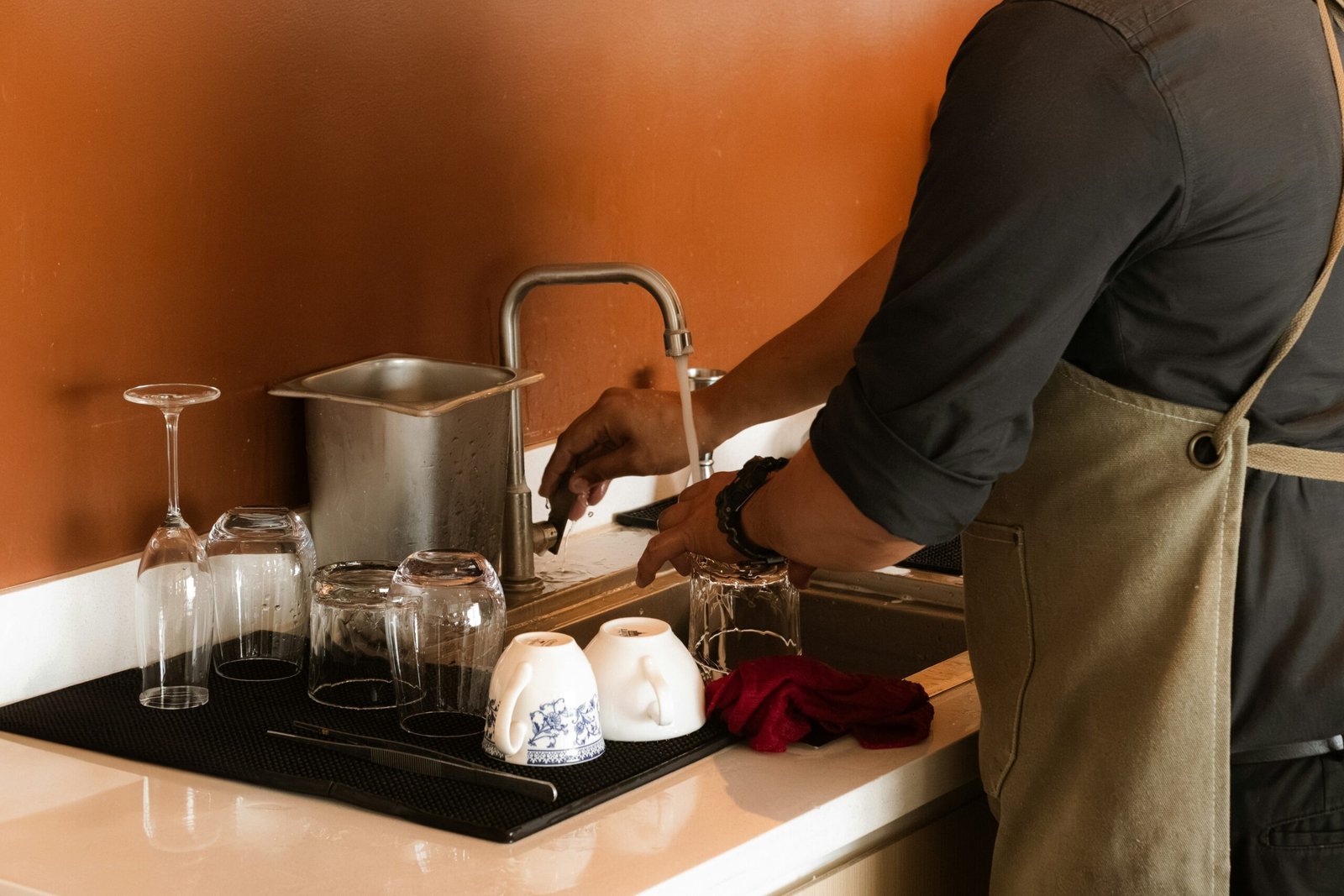
Although stainless steel is known for its durable appearance, even a minor scratch can stand out clearly on a smooth surface.Some other items that can scratch a stainless surface include a metal utensil, rough cleaning pad, handle of an appliance, or something being dragged across the surface.This commonly raises the question of how to remove scratches from stainless steel without making the damaged area more noticeable.
It’s not only about the scratch When choosing a repair method, you’ll also want to take into account the type of stainless steel (or finish), how deep the scratch is, the orientation of the grain, and whether the appliance has a protective clear coat coating. Many modern appliances are labeled as stainless steel but are not finished quite like standard stainless-steel appliances. For instance, GE makes a differentiation between traditional uncoated stainless and fingerprint-resistant stainless-the latter includes a clear coat.
This distinction matters because an abrasive method that works safely on one uncoated surface may damage or dull a different type of finish.
So, before trying toothpaste, baking soda, a polishing compound, or an abrasive pad, first determine what you are dealing with. This guide covers how to remove scratches from stainless steel using controlled methods that suit the surface while helping you avoid unnecessary damage.
Is It Possible to Completely Remove Scratches From Stainless Steel?
Sometimes a scratch may be greatly minimized, but “removing” as well as “restoring the original factory finish” are different things.
A very light surface scratch may be hard to spot after clean-up and polish. But it also is harder to hide a deeper scratch – and doing so may involve blending the surface, which can affect a much broader area.
This is why the best approach to how to get scratches out of stainless steel starts with assessment rather than immediately choosing a cleaning product.
Think of the goal as:
Reduce the visibility of the damage while preserving a consistent surrounding finish.
If you aggressively treat a tiny scratch and create a large dull or cross-grain patch, the repair may become more noticeable than the original problem.
First, Identify Your Stainless-Steel Finish
Before repairing the scratch, first identify the type and finish of the stainless steel surface.
Traditional brushed stainless steel
Some stainless steel appliances feature a noticeable grain pattern that runs in a specific direction.You might notice a fine line that runs the length or width of the panel.
Here’s the grain. Whirlpool says to scrub non-matte steel with the direction of the grain, and explicitly states no scrubbing pad can hurt its finish.
Fingerprint-resistant stainless steel
There is a clear coating on some modern appliances that is over the stainless surface.
According to GE, its fingerprint-resistant stainless steel features a clear coat and it suggests mild soap, warm water and a soft or microfiber cloth for everyday cleaning. The company also discourages the use of abrasive cleaners and scouring pads; bleach; vinegar-based cleaners; and other cleaners that could damage the finish.
Avoid scratch-removal abrasives on fingerprint-resistant finishes. If your appliance has a fingerprint-resistant coating, avoid applying generic stainless-steel scratch-removal products, as abrasive treatments may damage the specialized finish.
Polished or highly reflective stainless steel
Highly-polished surfaces may be very difficult to repair invisibly, since abrasion may alter the reflectivity of surrounding surfaces.
If the surface has more mirror-like quality than directional brushed look, go ahead and read that manufacturer’s care instructions first before dusting or wiping the piece.
Not sure what finish you have?
Look at the owner’s manual, manufacturer’s website, or model-specific care instructions before experimenting.
This is one of the most important steps in learning how to get scratches out of stainless steel because the wrong method can permanently change the finish.
How to Determine the Depth of a Stainless Steel Scratch
Once you’ve identified the finish, assess the scratch.
| Scratch type | What you may notice | General approach |
| Surface scuff | Mostly visible under certain lighting | Gentle cleaning or finish-compatible polishing |
| Light scratch | Clearly visible but shallow | Mild scratch-reduction approach |
| Moderate scratch | Fingernail catches slightly | More controlled cosmetic blending may be needed |
| Deep gouge | Strong fingernail catch or obvious groove | Consider professional refinishing |
| Coating damage | Finish looks chipped, altered, or uneven | Follow manufacturer-specific guidance |
A simple fingernail check can provide useful information, but it isn’t a substitute for identifying the finish.
For superficial scratches, your fingernail will glide over the scratch easily. For a heavier catch, the damage is more severe and may need a more complex repair.
The greater the depth of scratch, the more it will be necessary to refrain from trying out the deeper and more aggressive products.
Why Stainless-Steel Grain Direction Matters
A key principle in how to remove scratches from stainless steel is to always work in the same direction as the surface’s existing grain.
Look closely at the panel.The surface finish may feature extremely fine lines that run in a specific direction:
- Horizontally
- Vertically
- In another consistent direction
Your cleaning and cosmetic work should generally follow those lines.
Whirlpool recommends wiping stainless steel in the direction of the grain to help avoid streaks and finish damage while following proper stainless steel care.
What happens if you work across the grain?
Picture that “grain” as the door of a refrigerator. If you really work on a small section of it, trying to rub it vertically, you’ll eventually form a vertical “frown” across the horizontal grain.
While the original scratch might be diminished, the repaired area could be more conspicuous.
That’s why following the grain direction is important not only during cleaning but also when working on the surface.
Safe Ways to Remove Scratches From Stainless Steel
For a compatible, uncoated stainless surface, use the least aggressive approach that matches the problem.
Step 1: Clean the surface first
Clean off grease, food particles, dirt, fingerprints, and old residue before testing the scratch.
When it comes to stainless-steel cleaning and maintenance on a day-to-day basis, most companies advise warm water, soap and a cloth, or microfiber cloth.
When you clean, it’ll also help you to identify if you’re actually seeing a scratch or it’s just a streak, build-up or surface film.
Step 2: Find the grain
Identify the direction of the fine lines across the surface.
Do not assume that every appliance has a horizontal grain. Some surfaces have vertical grain.
Step 3: Start with the least aggressive suitable method
Where the mark is very faint, a stainless-steel cleaner or polish recommended by the manufacturer may be used to enhance its appearance without the need for abrasive refinishing.
And for standard stainless steel, Whirlpool’s recommendation is for the application of products made for stainless, and those directions should be followed.
Step 4: Reassess
After cleaning or polishing, inspect the surface under normal lighting.
If the scratch is significantly less noticeable, stop.
There is no benefit in continuing to abrade an area simply because a tiny mark remains visible at a particular angle.
Step 5: Escalate only when appropriate
If the scratch remains prominent and the surface is confirmed to be compatible with a more intensive repair, a controlled refinishing approach may be considered.
For coated or fingerprint-resistant surfaces, follow the manufacturer’s instructions instead.
How to Handle Light Stainless-Steel Scratches
Your light scuff and scratch chips are the most eligible for a conservative fix.
For example, picture a knife cutting a refrigerator door that is just barely scratchy. There is no noticeable snag when the door is illuminated at an angle, though the mark can be seen.
This is significantly different from a deep gouge.
To maintain a traditional uncoated finish, simply clean the surface and then select an appropriate stainless-steel polish or cleaner.Apply the product gently with a soft cloth, following the direction of the grain.Do not immediately jump to aggressive sanding.
GE says that its stainless-steel cleaning routine could help to decrease the look of scratches, but it also says there is not an approved way to cover up scratches on its appliances.
That’s a good reminder that scratch less doesn’t always mean scratch free.
What About Toothpaste, Baking Soda, and Other Home Remedies?
Search results for how to get scratches out of stainless steel often recommend household products such as toothpaste or baking soda.
The problem is that these methods are not universally appropriate for every stainless-steel finish.
Toothpaste
Toothpaste Mild abrasives are present in some kinds of toothpaste, which is why they can be recommended for superficial scratches. However, different formulas exist, and rubbing one around on a coated or sensitive surface could cause a more visible beauty issue.
It must not be mistaken for a stainlesssteel repair tape.
Baking soda
Baking soda is used to clean stainless steel Cleaning stainless steel with baking-soda is often described in the literature. At Whirlpool and Maytag one refers to cleaning with baking-soda approaches for some stainless surfaces.
However, scrubbing out a stain is different from fixing a scratch. Any abrasive will mar the finish through the use of abrasive scrubbing.
Stainless-steel polish
A polish designed specifically for your type of stainless steel can be useful for improving surface appearance, particularly on compatible traditional stainless surfaces.
Always follow the manufacturer’s instructions.
Abrasive pads
Abrasive pads can change the finish rather than simply “cleaning” it. They should not be used casually on coated or fingerprint-resistant surfaces.
The important lesson is that the product matters less than whether it is appropriate for the specific finish.
How to Get Deeper Scratches Out of Stainless Steel
Deep scratches are where DIY repair gets a bit trickier.
You have a deep indentation on your fingernail when it is pressed or the surface has a clear grove.
A more extensive repair in between these two may require the removal or blending of the surrounding material to allow for blending with the neighboring material so as to hide the damaged area.
That creates two risks:
- You may fail to reduce the original scratch.
- You may create a larger area with a different texture or sheen.
For this reason, deep scratches deserve more caution than light scuffs.
When controlled abrasion may be appropriate
This type of scratch can be used to blend a scratch into the surrounding grain on some uncoated, brushed stainless surfaces using an appropriate abrasive.
On the other hand, it has to be compatible to the finish, and you need to match the grain up very well.
When you should not experiment
Avoid assuming that sanding is appropriate when:
- The surface is fingerprint-resistant.
- The surface has a clear coating.
- The finish is highly polished.
- You cannot identify the finish.
- The appliance is expensive or difficult to replace.
- The scratch covers a large visible area.
GE specifically states that heavy or more visible scratches on its fingerprint-resistant stainless finish do not have an approved repair method for covering them.
How to Get Scratches Out of Stainless Steel Appliances
The same general principles apply to refrigerators, dishwashers, ovens, and range hoods, but their finishes can differ.
Refrigerators
Large refrigerator doors make inconsistent grain or polishing particularly easy to notice.
Check whether the finish is traditional stainless or fingerprint-resistant before attempting repair.
Dishwashers
Dishwasher fronts can have specialized finishes, so avoid assuming that a generic abrasive method is safe.
Ovens and ranges
Heat-adjacent surfaces may have manufacturer-specific care requirements. Always allow the appliance to cool completely before cleaning or working on its exterior.
Stainless-steel sinks
Sinks generally experience more routine abrasion than appliance fronts. A brushed sink may show a pattern of fine scratches over time, making grain direction particularly important.
Exhaust or exhaust-tip surfaces
People also search how to get scratches out of stainless steel exhaust when dealing with stainless exhaust components or decorative exhaust tips.
Unlike kitchen appliances, these surfaces may be exposed to elements such as heat, road debris, moisture, and exposure to the environment.
Never use a kitchen-appliance scratch removal technique on a part of your exhaust system. Always check your manufacturer specifications for material and finishes prior to any product application, and this is particularly important where you have a hot exhaust.
Mistakes That Can Make Stainless-Steel Scratches Worse
Working against the grain
This can create a contrasting mark that is more visible than the original scratch.
Using steel wool
Manufacturers including Whirlpool and Maytag warn against steel wool and other abrasive materials as part of safe appliance cleaning practices.
Assuming every stainless surface is uncoated
Fingerprint-resistant stainless may have a clear coating. GE specifically warns that this finish should not be treated like traditional stainless steel.
Starting with the strongest method
If a gentle approach can reduce the mark, aggressive abrasion is unnecessary.
Rubbing only one tiny spot repeatedly
You can create an obvious patch with a different texture or reflectivity.
Ignoring the owner’s manual
Manufacturer instructions take priority because finishes vary by model.
When Should You Stop DIY Scratch Repair?
Knowing when to stop is just as important as knowing how to get scratches out of stainless steel.
Consider professional refinishing or manufacturer guidance when:
- The scratch is a deep gouge.
- A large area is damaged.
- The surface is coated.
- The appliance has a fingerprint-resistant finish.
- The finish is highly reflective.
- A previous repair has created a visible patch.
- You cannot identify the surface finish.
- The appliance is expensive and cosmetic damage would be costly to replace.
A professional may be able to assess whether the surface can be blended, refinished, or whether replacing a panel is more practical.
Can You Restore a Stainless-Steel Appliance to Its Factory Finish?
This depends on the damage and the finish.
A light scuff may become difficult to notice.
A moderate scratch may be blended into the existing grain.
A deep gouge may remain visible or require broader refinishing.
A damaged coating may not be safely repairable using ordinary stainless-steel polishing methods.
This is why “completely restore the factory finish” is not a realistic promise for every scratch.
For appliances with extensive cosmetic damage, alternatives such as panel replacement or refacing can sometimes make more sense than repeatedly sanding or polishing the original surface.
How to Prevent New Stainless-Steel Scratches
If you have successfully repaired or minimized a scratch, The best part is that prevention is quite simple through proper appliance care than doing the repair all over again.
Use mild, microfiber, or other OEM approved cloths for general cleaning. Clean with the grain not against it. Don’t use steel wool, abrasive pads, or cleaners with grit and chemicals that may be harsh unless specifically recommended by the OEM.
When it comes to coated finishes, err on the side of caution. If your GE fingerprint-resistant stainless steel is coated, GE advises a soft cloth and mild soap and water and names some abrasive and chemical products to stay away from.
Refrain from dragging metal containers, utensils or other hard items across the surface.
A Quick Stainless-Steel Scratch Decision Guide
If you’re uncertain about the proper steps, follow this sequence:
Is the surface coated or fingerprint-resistant?
If yes, check the manufacturer’s instructions before using any abrasive treatment.
Does the scratch barely show and not catch your fingernail?
Start with gentle, finish-compatible cleaning or polishing.
Does it catch slightly?
Consider whether controlled cosmetic blending is appropriate for the confirmed finish.
Is it a deep gouge?
Professional refinishing may be more appropriate.
Did an earlier attempt create a larger patch?
Stop experimenting and seek finish-specific advice.
This decision process is more reliable than choosing a method simply because it worked on someone else’s refrigerator or sink.
FAQs
1.Can toothpaste remove scratches from stainless steel?
Reasons for considering it Toothpaste may sometimes be mentioned as a mild abrasive, but it’s not a universal stainless-steel scratch remover. For certain finishes and scratches, however, abrasive rubbing will damage coated surfaces.
2.Does baking soda remove scratches from stainless steel?
Yes, you can use baking soda to clean specific surfaces of stainless steel; cleaning a stain is quite different from fixing a scratch. Rubbing too hard with the powder will change the finish, so check the care label.
3.Can you use sandpaper on stainless steel?
Sandpaper is an acceptable part of commercial or specialty refinishing on a select few stainless steel uncoated surfaces, but only when done by an expert as improper techniques or grit can permanently alter the finish. It should not be used on coated or fingerprint-resistant appliances.
4.How do I know which direction to rub stainless steel?
Look closely for the fine directional lines in the surface. These lines indicate the grain. For traditional stainless steel, manufacturers such as Whirlpool recommend wiping in the direction of the grain.
5.Can scratches be removed from fingerprint-resistant stainless steel?
Do not presume that techniques for removing scratches are safe. Fingerprint-resistant stainless can be coated with a clear finish. GE recommends GE advised that mild soap and warm water along with a lint-free or soft cloth can be used for its fingerprint resistant finish; however, it states that there is no approved technique for masking deep or more noticeable scratches.
6.What is the best way to remove a deep scratch from stainless steel?
There is no single method that works for every deep scratch. First identify the finish. A deep gouge on compatible uncoated stainless may require controlled refinishing, while a coated appliance may need manufacturer-specific guidance or professional assessment.
7.Can WD-40 remove scratches from stainless steel?
If a product improves surface shine or merely changes the surface appearance for a few minutes it may not truly repair the scratch itself. When you hear “treat” (concerning what goes in and on the metal, oils or spray) think cosmetic, not repair damaged metal.
Conclusion
If you’re searching how to get scratches out of stainless steel, the most important step is not choosing a cleaning product. It is identifying what kind of stainless surface you have and how deep the damage actually is.
If the scratches are light and the surface is a standard traditional stainless, a gentle cleaning or polish can lessen the mark. For scratches that are more noticeable, polishing and blending the surface is a more delicate process. In some cases coatings and fingerprint resistant finishes are not repairable.
The best approach is straightforward: Figure out the finish, measure the scratch, follow the grain, begin with the least abrasive method appropriate for your scratch, and stop before the repair exceeds the size of the flaw. This approach will maximize your chances of buffing out a scratch without creating a finishing dilemma of your own.











