


If you’ve ever stared at a dental implant quote and wondered, “Why are dental implants so expensive?” you’re not alone. Single-tooth implants routinely run $3,000 to $6,000+ in the U.S., and full-arch solutions can exceed $20,000. That’s a serious investment, especially when you’re already dealing with the stress of missing teeth.
The truth is, the cost of dental implants isn’t random. Implants cost so much because they require surgical-quality materials, imaging, specialists, and lab work that will give you 30 years of use. In this guide, you’ll learn how much dental implants should cost, what you’re actually paying for, why prices range so much, and how to fit this technique into your budget without sacrificing quality or safety.
After reading, you’ll know exactly how to get a quote, identify the real costs, and save money on the procedure with practical tips on financing and insurance.
Quick Answer: Why Are Dental Implants So Expensive?
Dental implants cost more than bridges or dentures because you’re paying for:
- Surgical-grade titanium or zirconia post that fuses with your jawbone (osseointegration).
- Custom abutment and crown fabricated in a dental lab to match your bite and smile.
- Advanced imaging and planning, including 3D CBCT scans and surgical guides for precision placement.
- Specialist time and training—often 7–10+ years beyond college for oral surgeons or periodontists. +1
- Facility overhead, including sterile operatory rooms, anesthesia equipment, and support staff.
- Long-term value, with implants lasting 20+ years versus 7–15 for bridges or dentures.
In short: you’re not just buying a “tooth.” You’re investing in a permanent, biocompatible solution backed by medical-grade technology and expertise.
Full Cost Breakdown: What’s Included in a Dental Implant Quote?
When you see a line item like “$4,200 for a single implant,” it’s easy to assume you’re just paying for the titanium screw. In reality, that quote bundles multiple components and services. Here’s what typically makes up the cost:
Implant Post (Titanium or Zirconia)
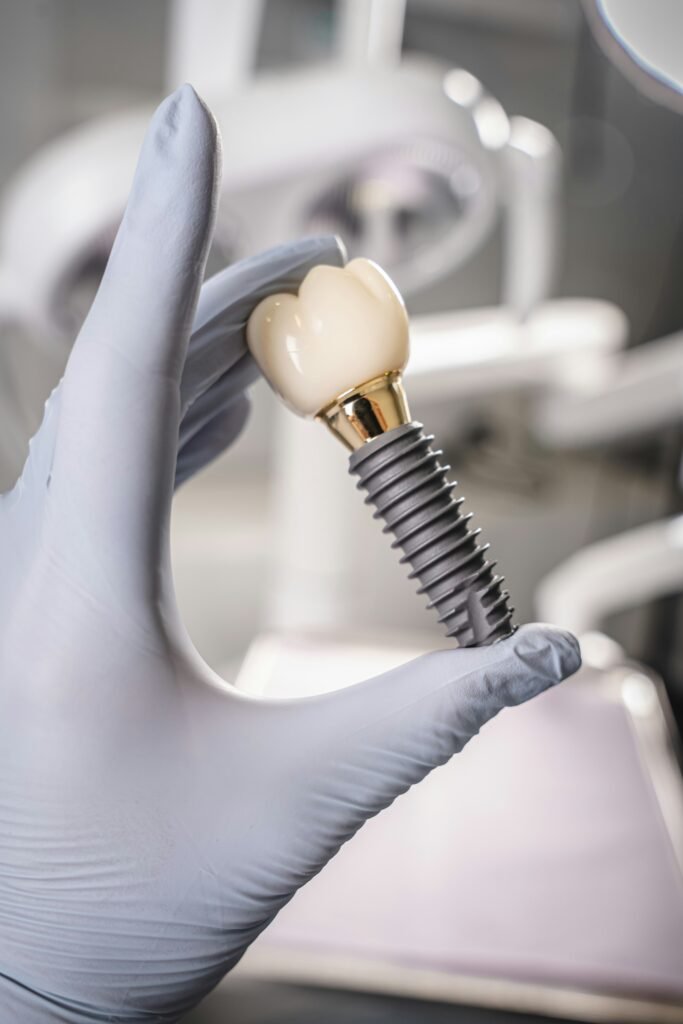
What is the implant? The implant is a small screw that is usually made from medical grade titanium or ceramic (zirconia). These materials are biocompatible which means your body will accept them and they will fuse with your jaw bone over 3-6 months through a process called dental implant osseointegration. The premium brands cost more but have better long term data and warranty (Straumann, Nobel Biocare).
Abutment
The abutment is the small connector piece that joins the implant post to the dental crown. Some clinics use stock abutments; others customize them for your bite and gum line, which adds to the cost.
Crown (The Visible “Tooth”)
The crown is the portion you can see and use to bite and chew food.
It’s custom-fabricated in a dental lab from porcelain, zirconia, or porcelain-fused-to-metal (PFM). Lab fees, material quality, and aesthetic customization all affect pricing.
Imaging & Planning
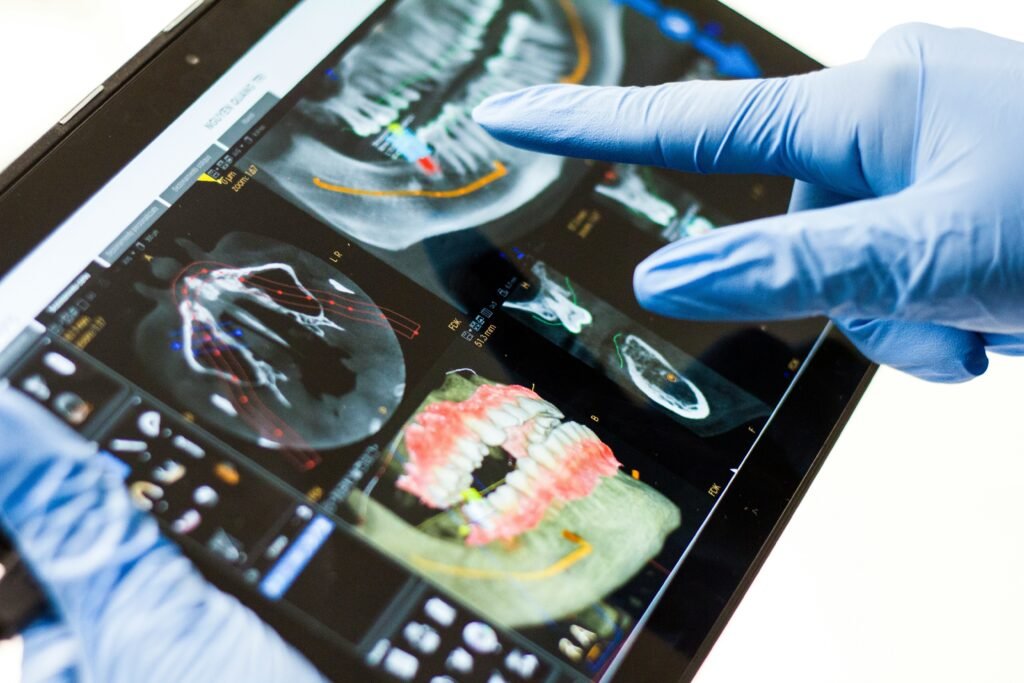
Before surgery, you’ll need 3D cone-beam CT (CBCT) scans and digital impressions. These allow the specialist to map your bone density, nerve locations, and ideal implant angle. Some clinics also use 3D-printed surgical guides for extra precision.
Surgical Procedure
This covers the specialist’s time, anesthesia or sedation, and use of the surgical suite. Complex cases (bone grafts, sinus lifts) add to this fee. +1
Additional Procedures
Many patients need extra work before or during implant placement:
- Bone grafts ($500–$1,200) if you’ve lost jawbone density.
- Sinus lifts ($1,500–$2,500) for upper back teeth.
- Tooth extractions ($150–$650 per tooth).
- Temporary teeth (flippers or Essix retainers) while you heal.
Example: Maria’s Single Implant in Houston
Maria paid $3,800 all-in for a single implant. Her breakdown:
- Implant post (Straumann): $1,200
- Abutment + crown (zirconia): $1,400
- CBCT scan + surgical guide: $400
- Surgery + anesthesia: $600
- Follow-ups + temporary tooth: $200
No hidden fees, no surprise add-ons—just transparent, all-inclusive pricing.
Why Prices Vary So Much: 7 Key Factors
One clinic quotes $2,500; another says $6,000 for the same procedure. Why? Here are the top drivers of price variation:
Understanding these factors helps you compare quotes apples-to-apples—and avoid “bait-and-switch” pricing.
Dental Implants vs Alternatives: Long-Term Cost & Value
Implants feel expensive upfront, but they often cost less over time than bridges or dentures. Here’s why:
Upfront Cost Comparison
- Single implant: $3,000–$6,000
- Three-unit bridge: $2,000–$5,000 (requires grinding down two healthy teeth)
- Partial denture: $1,000–$3,000 (removable, less stable)
Lifespan & Replacement Cycles
- Implants: 20+ years (often lifetime with proper care)
- Bridges: 7–15 years (may need 2–3 replacements over 20 years)
- Dentures: 5–10 years (plus relines, adhesives, repairs)
Maintenance Costs
- Implants: Routine cleanings, occasional crown replacement ($1,000–$1,500 after 15+ years).
- Bridges: Special flossing tools, higher decay risk on supporting teeth.
- Dentures: Adhesives, relines ($300–$600 every 2–3 years), replacements.
Health Impact
Implants preserve jawbone density and don’t damage adjacent teeth unlike bridges, which require filing down healthy neighbors, making long-term oral health an important consideration. Over 20 years, a $4,000 implant may cost less than two $2,500 bridges plus maintenance.
Hidden Costs & Red Flags: When “Cheap” Implants Get Expensive
You’ve seen the ads: “$999 Dental Implants!” It may sound appealing, but the fine print is where the important details often appear. Here’s what to watch for:
What’s Often Excluded
- Imaging fees (CBCT scans: $200–$500)
- Abutment or crown (can add $1,000–$2,000)
- Bone grafting (if needed: $500–$1,200)
- Follow-up visits or temporary teeth
Budget Implant Risks
Cheaper implants may use lower-grade titanium, have less surface treatment for osseointegration, or lack long-term clinical data. Failure rates can be higher, leading to costly revisions.
Dental Tourism Trade-Offs
Getting implants in Mexico or Costa Rica can save 40–60% upfront—but consider:
- Follow-up care: Who handles complications when you’re back home?
- Warranty claims: Will a U.S. dentist honor a foreign clinic’s warranty?
- Travel costs: Flights, hotels, time off work add up.
Red Flag Questions to Ask
- Is the crown and abutment included in the quoted price?
- What’s the warranty on the implant and who honors it?
- Are CBCT scans and surgical guides included?
- What happens if the implant fails—what are the revision costs?
- Is this an all-inclusive price or à la carte?
How to Make Dental Implants More Affordable: Financing, Insurance & Smart Shopping
Cost is the #1 barrier—but there are proven ways to lower your out-of-pocket expense.
Insurance Coverage
Most dental plans cover 50% of implants up to an annual maximum ($1,000–$2,000). Some plans have waiting periods (6–12 months) or exclude implants entirely. Always get pre-authorization in writing.
Payment Plans
- 0% APR financing (CareCredit, LendingClub, in-house plans). +1
- You may find financing options with monthly payments starting around $100–$300 for one implant.
HSA/FSA Use
Health Savings Accounts (HSAs) and Flexible Spending Accounts (FSAs) let you pay for implants with pre-tax dollars—effectively saving 20–30% depending on your tax bracket.
Dental Schools
Supervised implant programs at dental schools can cost 30–50% less—but expect longer appointment times and limited availability.
Timing Strategies
Spread procedures across two plan years to maximize insurance benefits. For example: place implants in December, crown in January—both count toward separate annual maximums.
Negotiation Tips
- Ask for cash discounts (5–10% off).
- Request a written, all-inclusive quote before committing.
- Compare 2–3 clinics—prices can vary by $1,000+ for the same work.
Real Patient Cost Stories (Use Cases)
Case 1: Single Implant (Houston, TX)
Patient: Maria, 42
Provider: Board-certified periodontist
Total Cost: $3,800 all-in
Breakdown: Implant post ($1,200), abutment + crown ($1,400), CBCT + guide ($400), surgery ($600), follow-ups ($200).
Timeline: 4 months (placement → healing → crown).
Financing: 0% APR for 12 months via CareCredit.
Case 2: Full-Arch All-on-4 (Dallas, TX)
Patient: John, 58
Provider: Oral surgeon + prosthodontist team
Total Cost: $22,000 (both arches)
Breakdown: 8 implants, 2 fixed bridges, CBCT, sedation, bone grafting.
Timeline: 6 months.
Financing: $400/month for 60 months at 0% APR.
Case 3: Dental School Patient (Burlington, VT)
Patient: Sarah, 35
Provider: Dental school supervised clinic
Total Cost: $2,200 (single implant)
Breakdown: Discounted implant post, reduced lab fees, student provider (supervised).
Timeline: 8 months (longer due to school schedule).
Trade-off: Lower cost, extended timeline.
What Happens If an Implant Fails? Warranty, Revisions & Risk Mitigation
Implant success rates are high (95–98% over 10 years), but failures can happen. Here’s what to know:
Failure Rates & Causes
- Early failure (first 3 months): Poor osseointegration, infection, smoking.
- Late failure (after 1 year): Peri-implantitis (gum disease around implant), excessive bite force.
Warranty Terms
- Manufacturer warranty: Often lifetime on the implant post (covers defects, not surgical failure).
- Clinic warranty: Varies—some cover replacement surgery for 1–5 years; others charge full price for revisions.
Revision Costs
If an implant fails outside the warranty period, expect to pay:
How to Minimize Risk
- Choose a board-certified specialist with high implant volume.
- Quit smoking (doubles failure risk).
- Maintain excellent oral hygiene (brush, floss, regular cleanings).
- Follow your scheduled appointments to monitor healing and identify problems early.
National vs Local Price Context (Data-Driven Authority)
Implant costs vary by region. National averages (2025–2026 data):
- Single implant (national avg): $3,500–$5,500
- Coastal cities (NYC, LA, SF): $5,000–$7,000+
- Midwest/South (Houston, Dallas, Atlanta): $3,000–$4,500 +1
- Rural areas: $2,500–$4,000 (but fewer specialist options)
Always compare local quotes to regional averages not just the lowest ad you see online.
Advanced Imaging & Surgical Guides: How Technology Can Improve Implant Outcomes
CBCT scans and 3D surgical guides aren’t just fancy add-ons—they improve safety and success rates.
CBCT Scans
Traditional X-rays show 2D images; CBCT provides 3D views of bone density, nerve locations, and sinus cavities. This reduces the risk of nerve damage or implant misplacement.
Surgical Guides
3D-printed guides act as a “template” during surgery, ensuring the implant goes in at the exact planned angle and depth. Studies show guided surgery can reduce failure rates and shorten healing time.
Same-Day Crowns vs Lab-Fabricated
Some clinics offer same-day crowns (CEREC), but lab-fabricated crowns often have better fit, aesthetics, and longevity—especially for front teeth.
The True Cost of Dental Implants: Maintenance & Long-Term Care
Implants aren’t “set and forget.” Long-term care affects lifespan and total cost.
Routine Care
- Cleanings: Every 6 months ($100–$200 per visit, often covered by insurance).
- X-rays: Annual bitewings or panoramic ($50–$150).
- Special tools: Interdental brushes, water flossers ($20–$100 one-time).
Potential Repairs
- Crown chip or crack: $300–$600 repair or $1,000–$1,500 replacement.
- Screw loosening: $100–$300 adjustment.
- Abutment replacement: $500–$800.
Hygiene Impact
Smoking, uncontrolled diabetes, or poor oral care can shorten implant lifespan. Non-smokers with good hygiene often keep implants 25+ years.
Why Are Some Dental Implants So Cheap?
You’ve probably seen ads for “$999 implants” or discount clinics offering half the average price. Here’s the reality:
- Exclusions: The low price often covers only the implant post—not the abutment, crown, imaging, or surgery.
- Budget brands: Less expensive implants may lack long-term clinical data or robust warranties.
- High-volume clinics: Some discount providers rely on volume over customization, which can affect fit and longevity.
- Promotional pricing: Loss leaders to get you in the door—then upsell you on “necessary” add-ons.
Always request a written, all-inclusive quote before committing and compare the details as part of dental care planning. If an offer seems too good to be true, take a closer look at what’s included.
FAQs: Top Questions About Dental Implant Costs
1. Why are dental implants so expensive compared to bridges?
Implants require surgery, advanced imaging, custom lab work, and specialist training—plus they last 20+ years without damaging adjacent teeth. Bridges are cheaper upfront but need replacement every 7–15 years and require filing down healthy teeth.
2. What’s the cheapest way to get dental implants?
Dental schools offer supervised care at 30–50% discount. You can also spread procedures across insurance plan years, use 0% APR financing, or choose budget implant brands (with caution). +1
3. Are dental implants worth the cost long-term?
Yes—for most patients. Over 20 years, implants often cost less than bridges or dentures when you factor in replacements, maintenance, and oral health benefits (bone preservation, no adjacent tooth damage).
4. How much do dental implants cost with insurance?
Most plans cover 50% up to an annual maximum ($1,000–$2,000). Some exclude implants entirely. Request pre-authorization and confirm whether any waiting periods apply before starting treatment.
5. Is dental tourism safe for implants?
It can be—but weigh the risks. Follow-up care, warranty claims, and complication handling are harder when you’re back home. Travel costs and time off work also add up. +1
6. What happens if my implant fails?
If covered by warranty, the clinic may replace it at no cost. Outside warranty, expect $2,500–$4,500 for removal, new implant, and crown—plus possible bone grafting.
7. Can I get dental implants on a payment plan?
Yes. Many clinics offer 0% APR financing (12–60 months), in-house payment plans, or third-party lenders like CareCredit. Monthly payments can be as low as $100–$300 for single implants.
Conclusion: Why Are Dental Implants So Expensive And Are They Worth It?
Dental implant costs are high due to their medically-advanced quality. They are the result of a highly skilled practitioner creating a personalized replacement, with cutting-edge equipment. The overall estimated cost of implants over 20 years and with the added bone-protection benefits and comparatively lower cumulative care costs, can also be less than that of bridges or dentures.
Be a savvy shopper: compare all-in offers with no hidden fees, ask what the warranty covers, look at your finances, and avoid “too cheap” deceptive dental practices. If you have a good provider, your investment can be well worth the outcome, health and life.











